
 Business License

What factors can affect the uniformity of the wall thickness of stainless steel pipes
The factors influencing the uniformity of the wall thickness of stainless steel pipes mainly include the quality of raw materials, production processes, equipment accuracy, etc. The following is a detailed analysis:
Raw material factors
Quality of steel strip or steel billet: If the steel strip or steel billet itself has issues such as uneven thickness or uneven internal structure, the uniformity of the wall thickness will be affected after it is processed into stainless steel pipes. For example, during the rolling process of the steel billet, local deformation may be inconsistent, resulting in thickness differences, and these differences will continue in the subsequent processing of the steel pipes.
Uneven chemical composition: The chemical composition of stainless steel has a significant impact on its processing performance and microstructure. If the distribution of various elements in the raw materials is uneven, during the processing, the deformation ability and the degree of work hardening at different parts will vary, thereby causing uneven wall thickness. For example, the parts with higher carbon content may have greater hardness and increased processing difficulty. Under the same processing conditions, compared with the parts with lower carbon content, the wall thickness changes may not be consistent.
Production process factors
Punching process: In the production of seamless steel pipes, punching is a key process. If the position, angle, and speed of the punch head during punching are improperly controlled, the metal flow in different parts of the pipe during the punching process will be uneven, resulting in uneven wall thickness. For example, if the punch head is offset, the metal flow on one side of the pipe will be faster while on the other side it will be slower, causing wall thickness deviation.
Rolling process: During the rolling process, factors such as the degree of wear of the rolls, the uniformity of the rolling force, and the stability of the rolling speed all affect the uniformity of the pipe wall thickness. Uneven wear of the rolls will cause different pressures on different parts of the pipe during the rolling process, resulting in variations in the wall thickness; unstable rolling force will cause excessive or insufficient local deformation in the pipe during the rolling process, thereby affecting the uniformity of the wall thickness.
Drawing process: The dimensions of the mold, lubrication conditions, and drawing speed during the drawing process are all crucial factors. If the mold dimensions are not precise enough, the reduction in diameter at different parts of the steel pipe during the drawing process will be inconsistent, resulting in uneven wall thickness; poor lubrication will increase the friction between the steel pipe and the mold, causing uneven force on different parts of the steel pipe surface, and thereby affecting the uniformity of the wall thickness.
Welding process: For welded steel pipes, improper control of welding parameters such as current, voltage, and welding speed during the welding process can result in uneven metal filling at the weld seam, causing differences in wall thickness near the weld seam compared to other parts. Additionally, the alignment accuracy during welding is also crucial. If there is a deviation when the steel pipes are (i.e., when they are joined), the wall thickness at the weld seam will be uneven.
Equipment factors
Equipment accuracy: The accuracy of the equipment used for producing stainless steel pipes directly affects the uniformity of the wall thickness. If the mechanical accuracy of equipment such as piercing machines, rolling machines, and drawing machines is insufficient, it will cause problems such as positional deviation and uneven force during the processing of the steel pipes. For example, if the installation accuracy of the rolls in the rolling machine is not sufficient, the force received by the steel pipe during rolling will be uneven, affecting the uniformity of the wall thickness.
Equipment Maintenance: The maintenance status of the equipment also has an impact on the uniformity of wall thickness. After long-term use, if the equipment is not properly maintained and serviced in time, problems such as component wear and aging will occur, which will affect the performance and processing accuracy of the equipment. For example, if the top rod of the punching machine is severely worn, it will cause instability in the punching process, resulting in uneven wall thickness of the steel pipe.
Environmental factors
Temperature: During the production process of stainless steel pipes, changes in environmental temperature can affect the thermal expansion and contraction of the pipes. If the production environment temperature is unstable, the degree of thermal expansion and contraction at different parts of the pipe during heating, cooling, etc. may vary, thereby causing uneven wall thickness. Especially in processes such as high-temperature rolling and heat treatment, improper temperature control has a more significant impact on the uniformity of wall thickness.
Humidity: A high humidity environment may cause rusting or the formation of oxide scales on the surface of the steel pipe. During the processing, these oxide scales or rust stains will affect the contact and friction between the steel pipe and the molds, rollers, and other equipment, resulting in uneven force distribution in various parts of the steel pipe and subsequently affecting the uniformity of the wall thickness.
Recently Posted
-
Does the stainless steel welded pipe have specific temperature requirements during the solution heat
January 20, 2026Solution heat treatment involves heating stainless steel to a high temperature and then rapidly cooling it to achieve an oversatur Read More
 -
Can stainless steel welded pipes be made into thick pipes
January 20, 2026With the improvement of high-quality welding technology and increasingly strict weld inspection, the application fields of s Read More
 -
Three types of commonly available food-grade stainless steel on the market
January 20, 2026The common food-grade stainless steel pipes are mainly composed of iron, chromium and carbon and other elements. Household stainle Read More
 -
What are the requirements for stainless steel welding pipe production equipment
January 20, 2026As is well known, stainless steel welded pipes have been widely used in various industries such as machinery, chemical engineering Read More

Contact Us
Recommended Products
-
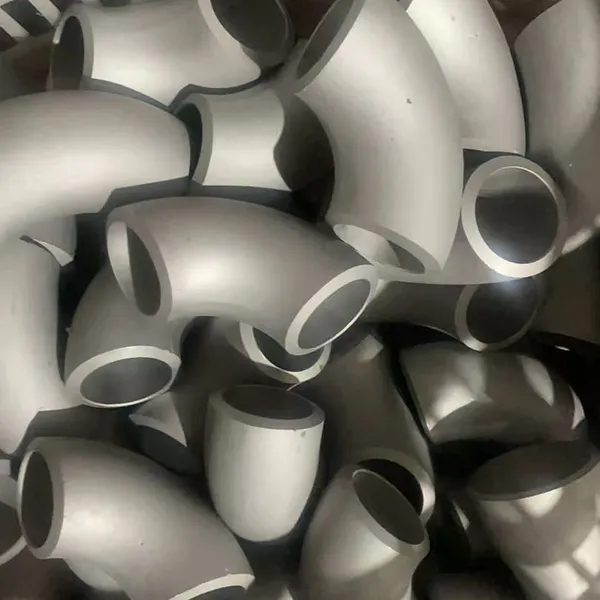
 Stainless Steel Elbow Welded Elbow 45/90/180-degree Seamless Pressed Elbow Long Radius Elbow Short Radius Elbow WholesaleNegotiableMOQ: 1 Piece
 -
316L/1.4405 Seamless Stainless Steel PipeNegotiableMOQ: 2 Meters
-
310s 440 Seamless Sanitary Piping Price 321 904l 201 20 Inch Seamless Steel Pipe A554 Stainless Steel PipeNegotiableMOQ: 1 Piece
-
China Brand ZZ Wholesale 304L 316 316L Welded Austenitic Piping Stainless Steel Pipe SupplierNegotiableMOQ: 2 Meters
-
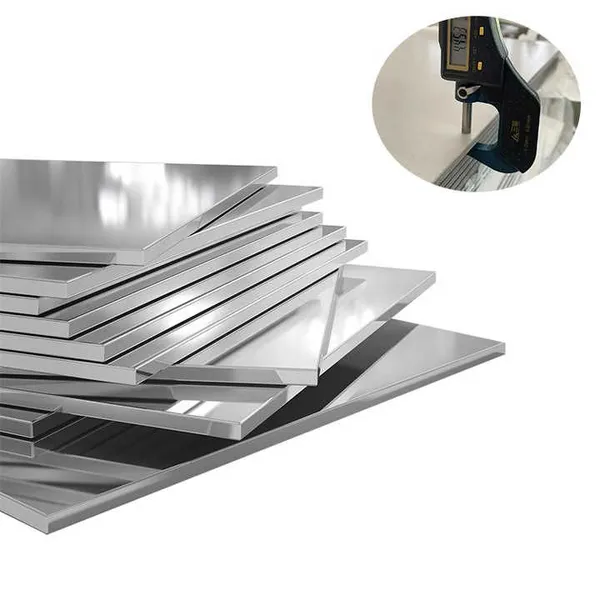
304/304L/316/409/410/904L/2205/2507/310H Premium Stainless Steel Sheets Supplier Custom Sizes & FinishesUS$ 1.72MOQ: 1 Ton
-
Stainless Steel ASME B16.9 Sch 45 90 Degree Pipe Fittings ElbowUS$ 8MOQ: 1 Piece
-
China Brand Zz 304L 316/316L GB En JIS Standard Thin Wall Welded Stainless Steel Water Pipe/TubeNegotiableMOQ: 2 Meters
-
BA 4 Inch 6 Inch 8 Inch 201 304 304L 316 316L Welded Seamless Stainless Steel PipeNegotiableMOQ: 2 Meters
-
ASME B36.19M-2004 SCH40S Stainless Steel Pipe - Complies With EU 3.1 CertificationUS$ 1 - 650MOQ: 1 Piece
-
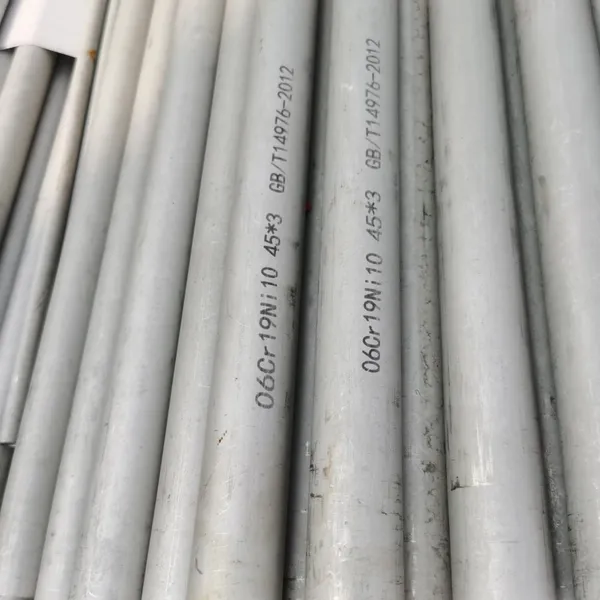
Factory TP309/TP309S/TP309H (UNS30900) Seamless Stainless Steel Pipe and Tube for Boiler BafflesUS$ 8MOQ: 200 Kilograms
-
TP347/TP347H/1.4961/S34709 Seamless Stainless Steel Pipe for UseNegotiableMOQ: 2 Meters
-
China 304 316 Stainless Steel Sanitary Welded Tube Food Grade Sanitary Grade Welded Pipe PolishingNegotiableMOQ: 1 Piece
-
China Manufacture Stainless Steel 316L Ba Seamless Welded Steel Pipe TubesUS$ 1760 - 1860MOQ: 5 Tons
-
316L/1.4405 Seamless Stainless Steel PipeNegotiableMOQ: 2 Meters
-
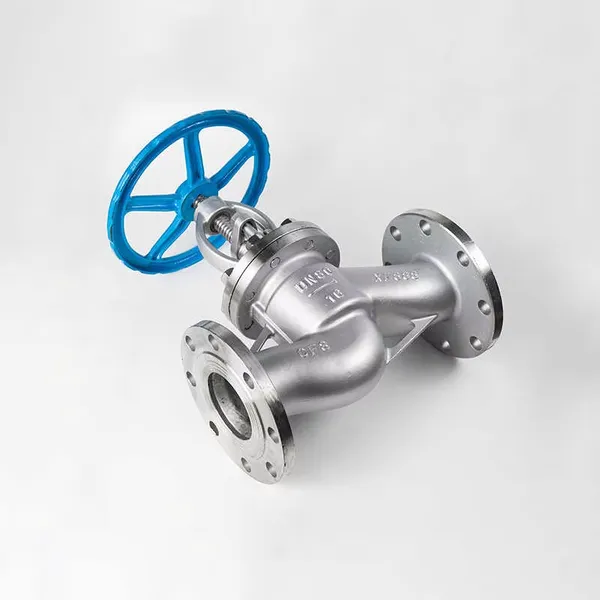
Stainless Steel Globe Valve – High Durability & Corrosion ResistanceNegotiableMOQ: 1 Piece
-
1.4529 Stainless Steel Flat Plate for Chemical Processing EquipmentUS$ 25 - 35MOQ: 1 Kilogram
-
Color Coated Steel Panels for Warehouse Partition Walls (Fireproof Grade)US$ 1 - 1.2MOQ: 50 Kilograms
-
Custom Width (600mm-1250mm) Colored Steel Coil With Scratch ResistanceUS$ 1 - 1.2MOQ: 50 Kilograms
-
0.5mm-3.0mm Colored Coated Steel Sheet With PVDF/Polyester CoatingUS$ 1 - 1.2MOQ: 50 Kilograms
-
JIS G 3322 Compliant Colored Coils With Third-Party Inspection ReportUS$ 1 - 1.2MOQ: 50 Kilograms