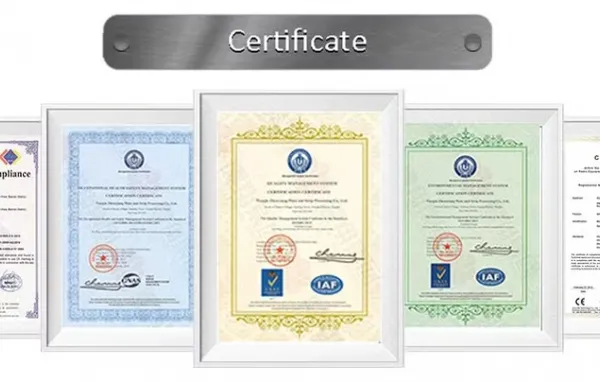

 Business License

There are several surface treatment processes for stainless steel.
Stainless steel surface treatment process
Because "stainless steel" does not mean it will never rust; rather, it means it is relatively less prone to rusting.
On the surface of stainless steel, there is a very thin chromium-rich oxide film that provides protection. However, it can also be corroded under different environmental influences and processing treatments, such as surface scratches, cleaning, carbon steel contamination, welding and other surface contaminants, which will largely destroy this protective layer.
Therefore, during the processing of stainless steel products, effective measures need to be taken to prevent rusting. The best way to achieve this is through surface treatment.
2. Stainless steel surface treatment process
The common surface treatment processes for stainless steel include: polishing, mirror finish, sandblasting, anti-fingerprint coating, etc. Each process has its own unique effect and application.
01. Wire drawing treatment
Metal wire drawing treatment is a very common decorative method in daily life, which can be made into several types such as straight lines, helical patterns, waves, random patterns and spiral patterns.
This surface treatment offers features such as good hand feel, fine luster and strong wear resistance. It is widely applied in electronic devices, household appliances, mechanical equipment, and other fields.
The surface texturing processes include: straight-line texturing, random-line texturing, wave-line texturing, spiral-line texturing and helical-line texturing.
Straight-line texturing: This is when there are straight lines on the surface of the stainless steel pipe. It is processed by rubbing the surface of the stainless steel, and it has two functions: removing the surface of the stainless steel and decorating the surface of the stainless steel.
Random Texture Pulling: It is made by a high-speed rotating copper wire brush. Through the friction caused by the back-and-forth and left-and-right movement of the metal, an irregular and undetailed matte texture is obtained. This processing generally requires a high level of precision on the surface of the metal.
Ripple Texturing: This is typically achieved using a polishing machine or a texturing machine. It involves the axial movement of the upper set of grinding rollers and the brushing on the metal surface, resulting in a ripple-like texture.
Rotary wire polishing: Also known as rotary optical polishing, it is a type of wire pattern obtained by mounting a cylindrical felt or nylon grinding wheel on a drilling machine, and then applying a mixture of coal oil and polishing paste to the metal surface for rotational polishing.
Thread sanding: This process involves using a small motor mounted on a shaft with a circular felt pad. The motor is then fixed on a table at an angle of approximately 60 degrees to the edge of the table. A drag board with a fixed metal strip is also prepared. On this drag board, a straight-edged polyester film is attached to limit the width of the thread.
02. Mirror Finish Treatment
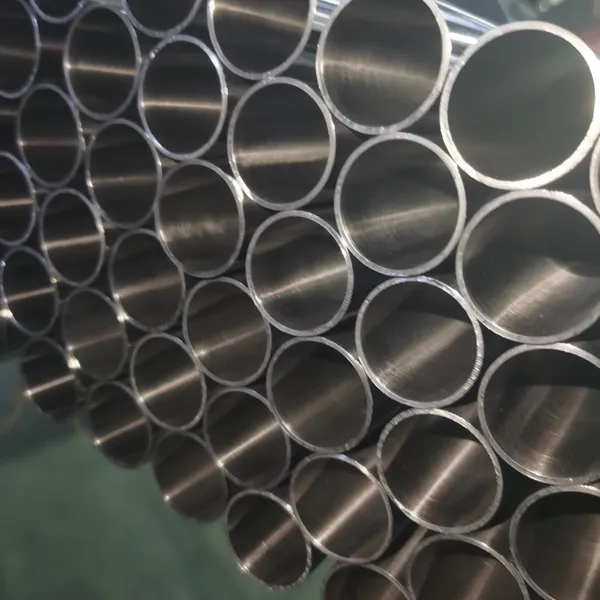
The mirror finish of stainless steel simply means polishing the surface of stainless steel. The polishing methods include physical polishing and chemical polishing.
It is also possible to perform local polishing on the stainless steel surface. The polishing levels include ordinary polishing, ordinary 6K, fine grinding 8K, and super fine grinding 10K.
The mirror gives people a sense of high-end simplicity, modernity and futurism.
03. Sandblasting Treatment
This is a common surface treatment process in stainless steel processing. It mainly uses the power generated by compressing air to create a high-speed jet, which sprays the material onto the surface of the workpiece to be processed, resulting in a fine granular sand-like surface on the plate.
The surface after sandblasting is uniform in structure, which can create the low-key and durable characteristics of the product, and the production efficiency is also high.
04. Anti-fingerprint property
The stainless steel fingerprint-resistant board is a composite coated board obtained by performing fingerprint-resistant treatment on the surface of stainless steel. The coating method mainly adopts roller coating.
The fingerprint-resistant processing technology was initially developed to meet the needs of users in the home appliance industry. During the production process, due to the need for multiple manual touches by workers on many components, sweat stains are prone to form on the surface of the parts, affecting their appearance. The development of the fingerprint-resistant board thus began from this point.
Recently Posted
-
Does the stainless steel welded pipe have specific temperature requirements during the solution heat
January 20, 2026Solution heat treatment involves heating stainless steel to a high temperature and then rapidly cooling it to achieve an oversatur Read More
 -
Can stainless steel welded pipes be made into thick pipes
January 20, 2026With the improvement of high-quality welding technology and increasingly strict weld inspection, the application fields of s Read More
 -
Three types of commonly available food-grade stainless steel on the market
January 20, 2026The common food-grade stainless steel pipes are mainly composed of iron, chromium and carbon and other elements. Household stainle Read More
 -
What are the requirements for stainless steel welding pipe production equipment
January 20, 2026As is well known, stainless steel welded pipes have been widely used in various industries such as machinery, chemical engineering Read More

Contact Us
Recommended Products
-
 Stainless Steel Elbow Welded Elbow 45/90/180-degree Seamless Pressed Elbow Long Radius Elbow Short Radius Elbow WholesaleNegotiableMOQ: 1 Piece
 -
316L/1.4405 Seamless Stainless Steel PipeNegotiableMOQ: 2 Meters
-
310s 440 Seamless Sanitary Piping Price 321 904l 201 20 Inch Seamless Steel Pipe A554 Stainless Steel PipeNegotiableMOQ: 1 Piece
-
China Brand ZZ Wholesale 304L 316 316L Welded Austenitic Piping Stainless Steel Pipe SupplierNegotiableMOQ: 2 Meters
-
304/304L/316/409/410/904L/2205/2507/310H Premium Stainless Steel Sheets Supplier Custom Sizes & FinishesUS$ 1.72MOQ: 1 Ton
-
Stainless Steel ASME B16.9 Sch 45 90 Degree Pipe Fittings ElbowUS$ 8MOQ: 1 Piece
-
China Brand Zz 304L 316/316L GB En JIS Standard Thin Wall Welded Stainless Steel Water Pipe/TubeNegotiableMOQ: 2 Meters
-
BA 4 Inch 6 Inch 8 Inch 201 304 304L 316 316L Welded Seamless Stainless Steel PipeNegotiableMOQ: 2 Meters
-
ASME B36.19M-2004 SCH40S Stainless Steel Pipe - Complies With EU 3.1 CertificationUS$ 1 - 650MOQ: 1 Piece
-
Factory TP309/TP309S/TP309H (UNS30900) Seamless Stainless Steel Pipe and Tube for Boiler BafflesUS$ 8MOQ: 200 Kilograms
-
TP347/TP347H/1.4961/S34709 Seamless Stainless Steel Pipe for UseNegotiableMOQ: 2 Meters
-
China 304 316 Stainless Steel Sanitary Welded Tube Food Grade Sanitary Grade Welded Pipe PolishingNegotiableMOQ: 1 Piece
-
China Manufacture Stainless Steel 316L Ba Seamless Welded Steel Pipe TubesUS$ 1760 - 1860MOQ: 5 Tons
-
316L/1.4405 Seamless Stainless Steel PipeNegotiableMOQ: 2 Meters
-
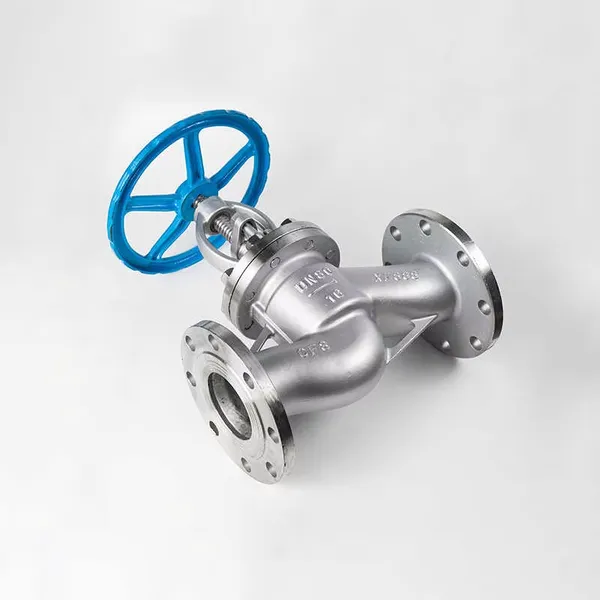
Stainless Steel Globe Valve – High Durability & Corrosion ResistanceNegotiableMOQ: 1 Piece
-
World's Most Affordable Color-Coated Steel Sheets - 0.3mm to 3mm Thickness - Mill Test Report IncludedUS$ 1102MOQ: 10 Kilograms
-
Color-Coated Steel Sheets With 15-Year Fade Warranty - JIS G 3322 Standard CompliantUS$ 1102MOQ: 10 Kilograms
-
Prefab Building Material - 0.4mm Color-Coated Corrugated Sheets - 100,000㎡ Monthly OutputUS$ 1102MOQ: 10 Kilograms
-
Industrial-Grade Color-Coated Sheets - 150-250g/m² Zinc Coating - Weather & UV ResistantUS$ 1102MOQ: 10 Kilograms
-
Factory-Direct Color-Coated Steel Plates - PVDF/Polyester Coating - 1220mm Standard WidthUS$ 1102MOQ: 10 Kilograms