
 Business License

Comparison of the performance between stainless steel pipes and other water supply pipes
Modern building water supply pipes are mostly concealed, such as pipe shafts. Therefore, if the material selection for the pipes is incorrect, the resulting troubles and costs can be multiplied. So the principle for selecting water supply pipe materials is energy-saving, recyclable, safe and reliable, and economical and hygienic. Only pipe materials that meet these principles can be considered truly good pipe materials. The commonly used water supply pipe materials mainly include stainless steel pipes, copper pipes, galvanized pipes, composite pipes, and plastic pipes, etc. Let's compare stainless steel pipes and other commonly used water supply pipe materials from these aspects.
Comparison of the strength of water supply pipes such as stainless steel pipes
The most commonly used stainless steel pipes in the water industry are 304 and 316 stainless steel. Both can meet the usage conditions for most water treatment and transportation.
The tensile strength of 304 stainless steel pipes is twice that of ordinary steel pipes and 3-4 times that of copper pipes, and 8-10 times that of plastic pipes. The strength of material selection determines whether the water pipes are sturdy and resistant to impact, safe and reliable. Because safety and reliability are the most critical requirements for building water supply pipes. When subjected to external force impact, stainless steel pipes have very little possibility of leaking, but copper pipes and plastic pipes have a higher possibility of leaking, and are prone to damage during construction or secondary decoration. The main complaint about plastic water pipes is leakage, and leakage is due to the inability of plastic water pipes to withstand external force impact and damage.
In addition, the working pressure of the water supply system in high-rise buildings is generally higher than 0.6 Mpa, and the pressure-bearing requirements for pipe materials are high. The working pressure of plastic pipes is less than this value and does not meet the requirements. While composite pipes have a large difference in expansion coefficients between the two materials, if the bonding is not firm or the temperature changes are large, it is prone to produce a separation layer. Thin-walled copper pipes can withstand a maximum pressure of 5.9 Mpa, while thin-walled stainless steel pipes can withstand very high water supply pressure, reaching over 10 Mpa, especially suitable for high-rise water supply.
Nowadays, many world-famous buildings have adopted stainless steel pipes as the main water supply pipes. For example, the Great Hall of the People in Beijing, many buildings in China, Shenzhen Jingji 100, Yuanfa 100-story buildings, etc., Olympic, Asian Games, and Asian Games events, over 80% of hospitals and four-star and five-star hotels in China use stainless steel pipes as water supply pipes.
Comparison of the thermal expansion and insulation performance of water supply pipes such as stainless steel pipes
The thermal expansion coefficient of stainless steel pipes is similar to that of copper pipes, being 1.5 times that of ordinary steel pipes, and stainless steel pipes have the characteristic of slow thermal expansion and contraction. The expansion coefficient of plastic pipes is too large, which is its fatal drawback, and is not suitable for hot water pipes. Under the condition of temperature changes in the environment, plastic pipes are prone to leakage and other safety hazards, especially in concealed projects, which is more harmful. Composite pipes have a problem of inconsistent expansion coefficients between the two materials, and the connection point between the two materials is prone to cracking, leading to water pipe rupture. While stainless steel pipes have a lower thermal conductivity than copper pipes, being 1/25 of copper pipes and 1/4 of ordinary steel pipes, they are very suitable for transporting hot water and have much better insulation performance than copper pipes.
Comparison of the corrosion resistance of water supply pipes such as stainless steel pipes
One of the most prominent advantages of stainless steel pipes is their excellent corrosion resistance. It is the best among the five types of pipe materials. Because stainless steel can undergo passivation with oxidants, a tough and dense chromium oxide protective film is formed on the surface of stainless steel, which may effectively prevent further oxidation reactions. However, other metal pipe materials, such as galvanized water pipes and copper pipes, have very weak passivation ability, resulting in the corrosion performance of galvanized pipes or copper pipes being much lower than that of stainless steel pipe materials.
Stainless steel does not undergo uniform corrosion like carbon steel, so no additional protective coating is needed when using stainless steel pipes. Using stainless steel pipes has no restrictions on the chemical composition of water, because stainless steel has excellent corrosion resistance in various oxygen contents, temperatures, pH values, and hardness of water. Stainless steel pipes can withstand very high flow rates, even when the flow rate is greater than 40 meters/second, still maintaining a very low corrosion rate of no more than 0.003 mm/year, especially suitable for high-rise water supply. Stainless steel generally does not suffer from local corrosion. 304 stainless steel can withstand a chloride content of up to 200 ppm, while 316 stainless steel can tolerate a chloride content of up to 1000 ppm. And this conclusion is based on scientific verification.
Comparison of the hygiene and environmental protection performance of stainless steel pipes and other water supply pipes
The hygiene performance of stainless steel pipes is superior. There will be no additional water pollution problems, no odor, no scaling, and no harmful substances will be released. It can maintain pure water quality and be harmless to human health. Stainless steel material itself has the characteristics of being safe and non-toxic, good cleanliness, etc. It has long been used in various fields related to human health. Stainless steel is not only widely used as standard materials in industries such as food production (including beverages, dairy products, brewing, pharmaceuticals, tableware and cooking utensils) for a long time, but also widely used in medical implants with extremely high material safety and cleanliness requirements, such as various stents, artificial joints and internal steel nails, and has become the standard material for extremely clean semiconductor industrial clean rooms. With the continuous improvement of people's water quality requirements and the increasingly strict regulations on the release of contaminants from water pipes in water, stainless steel pipes are undoubtedly the best choice for delivering high-quality drinking water.
In addition, the service life of stainless steel pipes is also the longest. Analyzing the usage situation of stainless steel abroad, the service life of stainless steel water pipes can reach 100 years, with the shortest being 70 years, which is the same as the lifespan of buildings. While the service life of composite pipes is affected and limited by the lifespan of the main material and thermal expansion, and since the composite pipes are made by combining two materials, there is a high possibility of the detachment of the bonding layer, which also affects the service life. The service life of plastic pipes is difficult to determine in China, and largely depends on production technology and raw material quality. The quality varies greatly, and high-quality plastic pipes can last up to 25-30 years, while inferior pipes may only last for a few years. The aging problem of plastic pipes is prominent. Sunlight, temperature, chemical substances, mechanical factors, and time can all cause its aging. Aging plastic pipes are prone to explosion under the impact of water pressure and water hammer when subjected to water pressure. The service life is greatly reduced. In addition, the hot-melt connection method is likely to cause leakage at the connection or material deterioration.
The initial investment in choosing stainless steel pipes is not high. Although thin-walled stainless steel pipes are slightly more expensive than plastic pipes, the increase in cost due to stainless steel pipes is insignificant. However, the material cost performance is much higher, and it is very cost-effective.
Recently Posted
-
Does the stainless steel welded pipe have specific temperature requirements during the solution heat
January 20, 2026Solution heat treatment involves heating stainless steel to a high temperature and then rapidly cooling it to achieve an oversatur Read More
 -
Can stainless steel welded pipes be made into thick pipes
January 20, 2026With the improvement of high-quality welding technology and increasingly strict weld inspection, the application fields of s Read More
 -
Three types of commonly available food-grade stainless steel on the market
January 20, 2026The common food-grade stainless steel pipes are mainly composed of iron, chromium and carbon and other elements. Household stainle Read More
 -
What are the requirements for stainless steel welding pipe production equipment
January 20, 2026As is well known, stainless steel welded pipes have been widely used in various industries such as machinery, chemical engineering Read More

Contact Us
Recommended Products
-
 Stainless Steel Elbow Welded Elbow 45/90/180-degree Seamless Pressed Elbow Long Radius Elbow Short Radius Elbow WholesaleNegotiableMOQ: 1 Piece
 -
316L/1.4405 Seamless Stainless Steel PipeNegotiableMOQ: 2 Meters
-
310s 440 Seamless Sanitary Piping Price 321 904l 201 20 Inch Seamless Steel Pipe A554 Stainless Steel PipeNegotiableMOQ: 1 Piece
-
China Brand ZZ Wholesale 304L 316 316L Welded Austenitic Piping Stainless Steel Pipe SupplierNegotiableMOQ: 2 Meters
-
304/304L/316/409/410/904L/2205/2507/310H Premium Stainless Steel Sheets Supplier Custom Sizes & FinishesUS$ 1.72MOQ: 1 Ton
-
Stainless Steel ASME B16.9 Sch 45 90 Degree Pipe Fittings ElbowUS$ 8MOQ: 1 Piece
-
China Brand Zz 304L 316/316L GB En JIS Standard Thin Wall Welded Stainless Steel Water Pipe/TubeNegotiableMOQ: 2 Meters
-
BA 4 Inch 6 Inch 8 Inch 201 304 304L 316 316L Welded Seamless Stainless Steel PipeNegotiableMOQ: 2 Meters
-
ASME B36.19M-2004 SCH40S Stainless Steel Pipe - Complies With EU 3.1 CertificationUS$ 1 - 650MOQ: 1 Piece
-
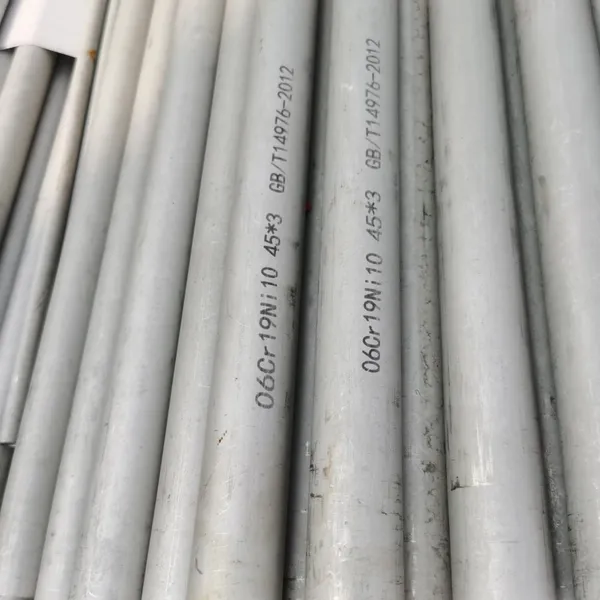
Factory TP309/TP309S/TP309H (UNS30900) Seamless Stainless Steel Pipe and Tube for Boiler BafflesUS$ 8MOQ: 200 Kilograms
-
TP347/TP347H/1.4961/S34709 Seamless Stainless Steel Pipe for UseNegotiableMOQ: 2 Meters
-
China 304 316 Stainless Steel Sanitary Welded Tube Food Grade Sanitary Grade Welded Pipe PolishingNegotiableMOQ: 1 Piece
-
China Manufacture Stainless Steel 316L Ba Seamless Welded Steel Pipe TubesUS$ 1760 - 1860MOQ: 5 Tons
-
316L/1.4405 Seamless Stainless Steel PipeNegotiableMOQ: 2 Meters
-
Stainless Steel Globe Valve – High Durability & Corrosion ResistanceNegotiableMOQ: 1 Piece
-
1.4529 Stainless Steel Flat Plate for Chemical Processing EquipmentUS$ 25 - 35MOQ: 1 Kilogram
-
Color Coated Steel Panels for Warehouse Partition Walls (Fireproof Grade)US$ 1 - 1.2MOQ: 50 Kilograms
-
Custom Width (600mm-1250mm) Colored Steel Coil With Scratch ResistanceUS$ 1 - 1.2MOQ: 50 Kilograms
-
0.5mm-3.0mm Colored Coated Steel Sheet With PVDF/Polyester CoatingUS$ 1 - 1.2MOQ: 50 Kilograms
-
JIS G 3322 Compliant Colored Coils With Third-Party Inspection ReportUS$ 1 - 1.2MOQ: 50 Kilograms