
 Business License

What are the common cold processing techniques for stainless steel
The cold processing forming technology of stainless steel is different from that of ordinary metals. One of the differences is that stainless steel has higher strength and cold work hardening properties. Secondly, because the stainless steel workpieces after cold processing forming need to have both functionality and decorative properties, it is very crucial to ensure that the surface of the stainless steel is not damaged and to maintain its stainless characteristics. Therefore, an appropriate stainless steel processing technology needs to be selected to perform cold processing forming on stainless steel.
Cold bending forming
Cold bending is widely used in the manufacturing of components from stainless steel sheets and strips. The punch press is basically an open single-action, mechanical or hydraulic-driven machine with a long worktable. It can not only produce straight components but also complex-shaped ones. The length of the components produced by the cold bending press depends on the original type and thickness of the stainless steel, as well as the power of the machine and the size of the tools that can be installed. To minimize the scratches on the stainless steel during processing, the tools of the cold bending press are generally made of hot working die steel with a chromium content of 12%, and plastic films can also be used as an additional protective measure.
Producing small quantities of general components through the universal molds of a cold bending press is very cost-effective. However, if special-shaped components with specific requirements are produced using dedicated molds, it is necessary to achieve cost reduction through mass production to meet the economic requirements of the products.
2. Roll forming
The rolling forming processing technology involves using a series of continuous frames to roll stainless steel materials into complex-shaped products, suitable for the production of stainless steel sheets and special-shaped wire rods. The sequence of the rolling rollers is designed according to the principle of gradually deforming the stainless steel material. The rolling machine is controlled automatically, and the roller type of each frame can be continuously and gradually rolled until the desired final product shape is obtained. If the shape of the required stainless steel component is complex, up to thirty-six frames may be used, but for simple-shaped components, three or four frames of processing are sufficient. The rolling rollers are mostly made of cold working die steel, with a hardness usually above HRC62. At the same time, to ensure the smoothness of the surface of the workpiece after rolling, the surface smoothness of the rolling rollers is also very high.
The roller rolling forming technology is the most cost-effective method for producing large quantities of stainless steel long pieces. For conventional plate rolling machines, the width range of the steel strips that can be processed is 2.5 mm - 1500 mm, and the thickness is 0.25 mm - 3.5 mm; for conventional wire rod rolling machines, the width range of the wire rods that can be processed is 1 mm - 30 mm, and the thickness is 0.5 mm - 10 mm. The components processed by the roller rolling forming method have diverse shapes, ranging from simple planes to complex and closed cross-sections.
3. Pressing and Forming
This manufacturing technique uses presses and molds to produce the desired product shapes. The domestic production of stainless steel stamping and forming is commonly seen in the production of stainless steel kitchenware. Stainless steel pots and basins need to undergo deep stamping to form, and the handles of kitchenware also need to be stamped and bent or flattened. The press can be mechanically driven or hydraulically driven. However, for deep stamping, it is better to use hydraulic drive as the hydraulic press can provide full-load pressure throughout the stroke length. Because the processing cost of stamping molds is high, the stamping forming technology is only adopted in large-scale production.
4. Rubber gasket molding
The use of rubber gasket forming technology can significantly reduce the cost of mold manufacturing and enable the production of small batches of stainless steel products. The forming mechanism used in this processing technology is made of relatively inexpensive materials, such as using hardwood or reinforced epoxy resin for the male mold, and using rubber pads to make the female mold. The rubber can be a solid rubber block or a layered rubber block, and its depth should be about 30% higher than that of the forming mechanism. When the forming mechanism closes, the rubber block will shape the stainless steel billet. When the forming machine lifts, the rubber pad returns to its original state. The rubber gasket can be reused. The processing characteristics of the rubber gasket forming technology determine that it cannot be used to produce products with complex shapes, and the maximum depth of the produced components is also limited. This technology is usually used to produce small batches of stainless steel components with a thickness of less than 1.5mm.
5. Edge folding forming
The edge folding machine is a simple bending machine that can be operated manually or mechanically. The simplest method is to firmly fix the steel plate on the machine worktable using a model with a bending radius, and place the extended part of the material on another worktable. This worktable can rotate around the center of the bending radius. When the movable worktable rises, it bends the stainless steel to the desired angle. Clearly, when bending, the stainless steel slides on the worktable. Therefore, to prevent scratching the stainless steel, the surface of the worktable must be smooth. In the actual processing, a plastic film is usually used to protect the surface of the stainless steel.
6. Cylinder Forming
The commonly used method is to use the bent plate technique to manufacture various types of cylindrical bodies or segments made from thin plates. Traditional plate rolling machines have a pair of adjustable rollers that can be adjusted according to the thickness of the steel plate. The third roller, the bending roller, controls the diameter of the formed cylinder. There is also a variant of this machine that uses the same three rollers, but the configuration is in a pyramid shape. The bottom roller is the driving roller, and the top roller rotates through the friction between the top roller and the workpiece. The diameter of the bottom roller is usually half that of the top roller. The minimum diameter of the cylinders produced by these two types of equipment is the top roller diameter plus 50mm. The maximum diameter of the cylinders produced depends on the size of the incoming material, the machine, and the rigidity of the formed part. In special cases, external supports are needed to support the cylinder.
Recently Posted
-
Does the stainless steel welded pipe have specific temperature requirements during the solution heat
January 20, 2026Solution heat treatment involves heating stainless steel to a high temperature and then rapidly cooling it to achieve an oversatur Read More
 -
Can stainless steel welded pipes be made into thick pipes
January 20, 2026With the improvement of high-quality welding technology and increasingly strict weld inspection, the application fields of s Read More
 -
Three types of commonly available food-grade stainless steel on the market
January 20, 2026The common food-grade stainless steel pipes are mainly composed of iron, chromium and carbon and other elements. Household stainle Read More
 -
What are the requirements for stainless steel welding pipe production equipment
January 20, 2026As is well known, stainless steel welded pipes have been widely used in various industries such as machinery, chemical engineering Read More

Contact Us
Recommended Products
-
 Stainless Steel Elbow Welded Elbow 45/90/180-degree Seamless Pressed Elbow Long Radius Elbow Short Radius Elbow WholesaleNegotiableMOQ: 1 Piece
 -
316L/1.4405 Seamless Stainless Steel PipeNegotiableMOQ: 2 Meters
-
310s 440 Seamless Sanitary Piping Price 321 904l 201 20 Inch Seamless Steel Pipe A554 Stainless Steel PipeNegotiableMOQ: 1 Piece
-
China Brand ZZ Wholesale 304L 316 316L Welded Austenitic Piping Stainless Steel Pipe SupplierNegotiableMOQ: 2 Meters
-
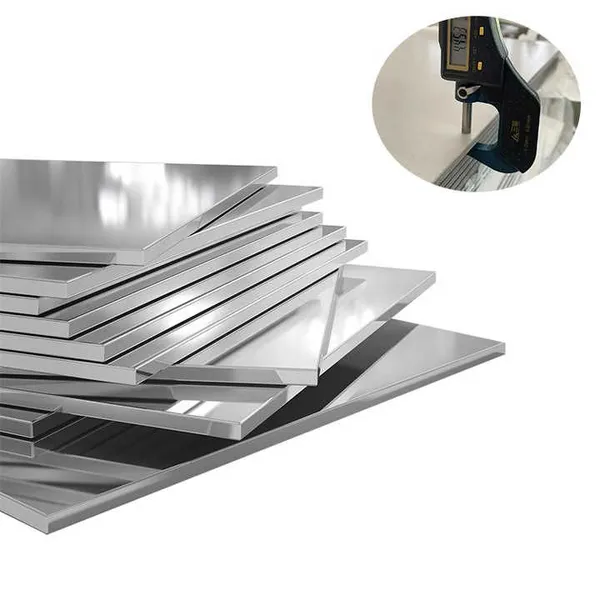
304/304L/316/409/410/904L/2205/2507/310H Premium Stainless Steel Sheets Supplier Custom Sizes & FinishesUS$ 1.72MOQ: 1 Ton
-
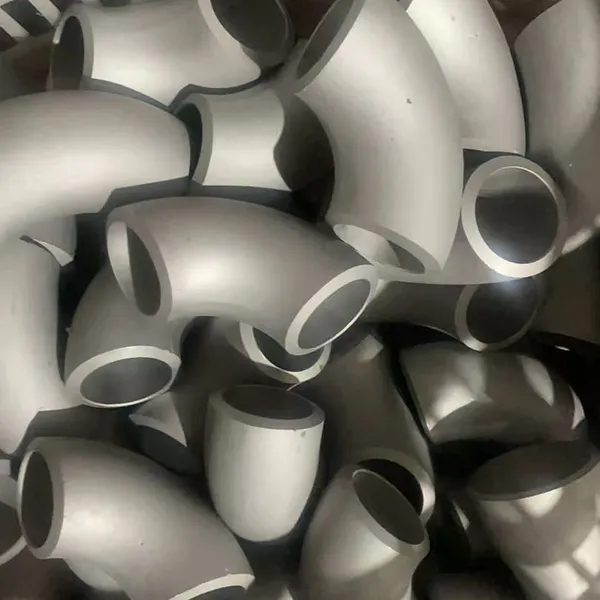
Stainless Steel ASME B16.9 Sch 45 90 Degree Pipe Fittings ElbowUS$ 8MOQ: 1 Piece
-
China Brand Zz 304L 316/316L GB En JIS Standard Thin Wall Welded Stainless Steel Water Pipe/TubeNegotiableMOQ: 2 Meters
-
BA 4 Inch 6 Inch 8 Inch 201 304 304L 316 316L Welded Seamless Stainless Steel PipeNegotiableMOQ: 2 Meters
-
ASME B36.19M-2004 SCH40S Stainless Steel Pipe - Complies With EU 3.1 CertificationUS$ 1 - 650MOQ: 1 Piece
-
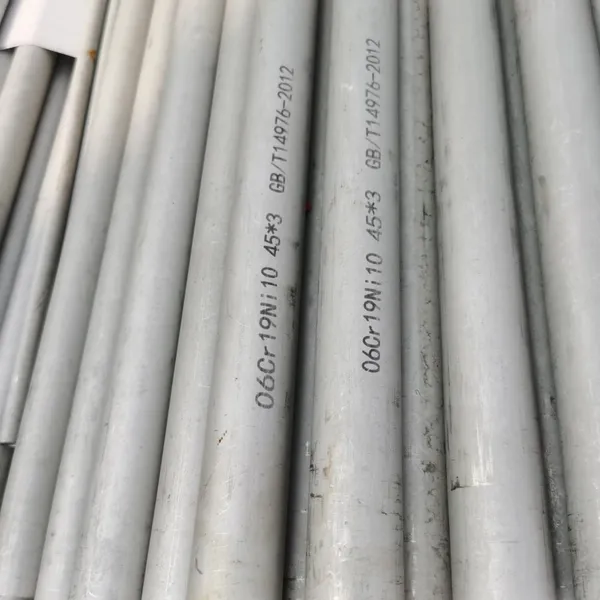
Factory TP309/TP309S/TP309H (UNS30900) Seamless Stainless Steel Pipe and Tube for Boiler BafflesUS$ 8MOQ: 200 Kilograms
-
TP347/TP347H/1.4961/S34709 Seamless Stainless Steel Pipe for UseNegotiableMOQ: 2 Meters
-
China 304 316 Stainless Steel Sanitary Welded Tube Food Grade Sanitary Grade Welded Pipe PolishingNegotiableMOQ: 1 Piece
-
China Manufacture Stainless Steel 316L Ba Seamless Welded Steel Pipe TubesUS$ 1760 - 1860MOQ: 5 Tons
-
316L/1.4405 Seamless Stainless Steel PipeNegotiableMOQ: 2 Meters
-
Stainless Steel Globe Valve – High Durability & Corrosion ResistanceNegotiableMOQ: 1 Piece
-
1.4529 Stainless Steel Flat Plate for Chemical Processing EquipmentUS$ 25 - 35MOQ: 1 Kilogram
-
Color Coated Steel Panels for Warehouse Partition Walls (Fireproof Grade)US$ 1 - 1.2MOQ: 50 Kilograms
-
Custom Width (600mm-1250mm) Colored Steel Coil With Scratch ResistanceUS$ 1 - 1.2MOQ: 50 Kilograms
-
0.5mm-3.0mm Colored Coated Steel Sheet With PVDF/Polyester CoatingUS$ 1 - 1.2MOQ: 50 Kilograms
-
JIS G 3322 Compliant Colored Coils With Third-Party Inspection ReportUS$ 1 - 1.2MOQ: 50 Kilograms