
 Business License

The application of stainless steel in the petrochemical equipment industry
Today, stainless steel is widely used in various fields. This article mainly introduces the application of stainless steel materials in the equipment manufacturing of the petrochemical industry. Considering that the application environment in the petrochemical field is much harsher than usual, higher requirements have been set for the stainless steel materials used, especially in terms of corrosion resistance.
Stainless steel petrochemical equipment in a low-temperature H2S-HCl-H2O environment
In the atmospheric and vacuum distillation columns and their condensation cooling systems, a H2S-HCl-H2O environment exists below the 150th position. Because HCl and H2S can mutually promote the formation of a cyclic corrosion. The uniform corrosion of carbon steel is relatively severe, Cr13 steel is prone to pitting corrosion, and 18-8 stainless steel is more susceptible to stress corrosion. In foreign countries, Monel, Hastelloy C-4 and titanium are generally used as composite materials for the inner components. Currently, in China, carbon steel and 0Cr13Al are widely used for the column top shells, while the inner components are also 0Cr13Al. Sometimes, 3RE60 and 2205 duplex stainless steel are also used. The carbon content of 0Cr13Al is less than 0.08%. After adding aluminum to the steel, the metal structure will contain a lot of ferrite. After welding or heat treatment, a small amount of martensite structure will be formed, which forms a strong anti-sulfur corrosion ability. Because it is cheaper than 18-8 stainless steel and has stronger anti-stress corrosion ability, it also increases the anti-pitting corrosion ability. 0Cr13Al is not only insensitive to chloride embrittlement but also to dinitrogen sulfide corrosion. However, most of these stainless steel composite plates and stainless steel pipes rely on imports. Some domestic factories have also applied 2205, and the usage effect is quite good.
Stainless steel petrochemical equipment in a low-temperature HCN-H2S-H2O environment
The catalytic absorption and desorption system is exposed to an environment of HCN-H2S-H2O corrosion. Carbon steel is prone to uniform corrosion, hydrogen blistering and SCC, while 18-8 stainless steel is susceptible to SCC. In China, 0Cr13Al is mainly used, such as in fractionating towers, absorption towers, desorption towers and stabilization towers, all of which use carbon steel and 0Cr13Al, while trays use 0Cr13 or 1Cr13. 12Cr2AlMoV and 08Cr2AlMo can also be used, but oxidation stainless steel welding rods cannot be used to weld chromium-molybdenum steel or 0Cr13 steel, as it is prone to SCC.
Stainless steel petrochemical equipment in a low-temperature RNH2 (ethanolamine) - H2S - CO2 - H2O environment
In the regeneration towers and gas absorption tower reboilers of dry gas and liquefied petroleum gas desulfurization systems, an environment of RNH2-H2S-CO2-H2O will be formed. Although carbon steel is prone to uniform corrosion and SCC, it is still commonly used to manufacture equipment. However, stress relief treatment must be carried out after welding. In equipment with severe environmental corrosion such as reboilers, it is best to choose 18-8 stainless steel, such as 321 stainless steel.
Stainless steel petrochemical equipment in a low-temperature H2S + H2O environment
Wet hydrogen sulfide environments are common in the processing of sulfur-containing crude oil. For environments with H2S > 50×10-6, the 20R16MnR (with Ni <1%, carbon equivalent ≤ 0.43, controlled S and P content) is the most suitable material for resisting SCC and SOHIC (directional stress hydrogen-induced cracking). The equipment needs to undergo heat treatment after welding, with the hardness not exceeding HB200, and the microstructure is ferrite and pearlite. For environments with H2S > 500×10-6 and cyanide > 20×10-6, the 20R or 16MnR + 0Cr13Al composite shell is suitable, with 0Cr13 as the inner liner. For environments with H2S + H2O, 18-8 stainless steel is not typically chosen, and 18-8 stainless steel welding rods cannot be used to weld carbon steel or low alloy steel. If an austenitic stainless steel is selected, cold processing cannot be carried out, and the hardness value cannot exceed HRC20.5; otherwise, it is prone to be affected by SCC.
Stainless steel petrochemical equipment in a high-temperature S-H2S-RSH environment
At the bottom of the atmospheric and vacuum distillation towers, the transfer lines and high-temperature heat exchangers are located above the 24th position. As the temperature rises, S-H2S-RSH type corrosion will occur. Therefore, Cr5Mo, Cr9Mo, and Cr13 are generally used. Cr13 stainless steel can fully meet the requirements for resisting high-temperature S-H2S-RSH corrosion. Because the Cr-containing stainless steel forms a protective layer of Cr2O3 and FeCr2S4 mixed spinel-type sulfide on the surface, it can effectively resist high-temperature sulfur corrosion. For those with lower requirements, low-alloy steel containing Al and Mo can be used; for those with higher requirements, 18-8 stainless steel is the best choice.
Stainless steel petrochemical equipment in a high-temperature S-H2S-RSH-RCOOH (cycloalkanoic acid) environment
Equipment that processes high-sulfur and high-acid (acid value ≥ 0.5 mgKOH/g) crude oil, such as the lower part of the atmospheric tower, vacuum tower, catalytic and coking fractionating towers, heavy oil pipelines (especially elbows), furnace tubes, etc., will be corroded when the temperature exceeds 240. The corrosion rate is the highest at 270-280, and it drops significantly above 343. The compound Fe(RCOO)2 formed by the reaction of RCOOH and Fe is soluble and has a cleaning effect on the surface FeS film. The corrosion of naphthenic acid is mainly related to the acid value, temperature and flow rate. When the acid value is less than 0.5, the influence is not considered. In the environment of naphthenic acid corrosion, the corrosion rate of carbon steel is 7-9 mm/a, while ferritic stainless steel and duplex stainless steel usually exceed their service temperature range and are not suitable for use. The best choice is 316 and 317 with a Mo content greater than 2% - 3%, and 304 stainless steel, although it has no effect on sulfur, still causes a certain degree of corrosion by naphthenic acid. Although Sinopec's "Material Selection Guidelines" allow the use of 304 stainless steel, it is best to use 316 stainless steel. If corrosion still occurs, 317 stainless steel should be used. For Liaohe crude oil with a high acid content, Jinsi and other refineries extensively use 316 and 317 for anti-corrosion renovation. If the vacuum tower uses a 20R + 316L composite plate, all the internals are made of 316L stainless steel.
Stainless steel petrochemical equipment in a high-temperature H2 + H2S environment
Both the hydrocracking and hydrorefining units operate in an environment with a H2 + H2S content higher than 240. This environment is more corrosive than that of pure H2 and H2S alone. For the equipment and pipelines of the reaction system, materials should be selected according to the Couper curve and the Nelson curve based on the operating conditions. If the reactor and the shell of the reaction effluent heat exchanger are made of 1.0-3.0Cr, 0.5-1.0Mo steel with a clad layer of 309S + 316L or 309S + 347, the internals and the tubes are made of 0Cr18Ni10Ti. The function of the stainless steel cladding layer on the inner wall is to prevent the base material CrMo stainless steel from undergoing high-temperature H2 + H2S corrosion. The double-layer cladding is used, with 309S stainless steel as the transition layer and 347 stainless steel or 316L stainless steel as the protective layer. The crack resistance is better than that of single-layer cladding. Using stabilized stainless steel is better than ultra-low carbon steel because it has stronger high-temperature strength. Stabilized stainless steel is suitable for temperatures up to 450°C. If used at higher temperatures, 25-20 steel should be used. The main factors affecting corrosion are temperature and H2S concentration. Therefore, operations should be carried out with caution to prevent the temper embrittlement of CrMo steel, the peeling of the cladding layer, and hydrogen-induced cracks.
Stainless steel chemical processing equipment in a multi-sulfuric acid environment
Diammonium sulfate is formed when the sulfides remaining from the processing of sulfur-containing raw materials on stainless steel components react with water and oxygen during shutdown. It can cause SCC in austenitic stainless steel, especially when the material is sensitized for a long time at 300-400 degrees and then subjected to stress corrosion cracking. It mainly occurs in the stainless steel overlay layers of hydrogen-containing reactors and internals, catalytic cyclone separators, flue gas expansion joints, etc. In engineering design, stable stainless steel with a Ti/C ratio of 7-8 is often selected, but SCC still occurs from time to time. Generally, during shutdown, neutralization and alkaline washing should be carried out in accordance with the requirements and steps specified in NECE-RP-OI-75, followed by nitrogen sealing. For example, 321 steel corrugated pipe expansion joints used on catalytic high-temperature flue gas pipelines often suffer from SCC. Foreign countries commonly use Incoloy 800 alloy to solve this problem. The Institute of Metal Research of the Chinese Academy of Sciences developed the B315 alloy, which is based on Cr20Ni25 and contains elements such as Mo, N, Cu, and Nb, and has been successfully applied in petrochemical plants in places like Maoming, Shanghai, and Guangzhou.
Recently Posted
-
Does the stainless steel welded pipe have specific temperature requirements during the solution heat
January 20, 2026Solution heat treatment involves heating stainless steel to a high temperature and then rapidly cooling it to achieve an oversatur Read More
 -
Can stainless steel welded pipes be made into thick pipes
January 20, 2026With the improvement of high-quality welding technology and increasingly strict weld inspection, the application fields of s Read More
 -
Three types of commonly available food-grade stainless steel on the market
January 20, 2026The common food-grade stainless steel pipes are mainly composed of iron, chromium and carbon and other elements. Household stainle Read More
 -
What are the requirements for stainless steel welding pipe production equipment
January 20, 2026As is well known, stainless steel welded pipes have been widely used in various industries such as machinery, chemical engineering Read More

Contact Us
Recommended Products
-
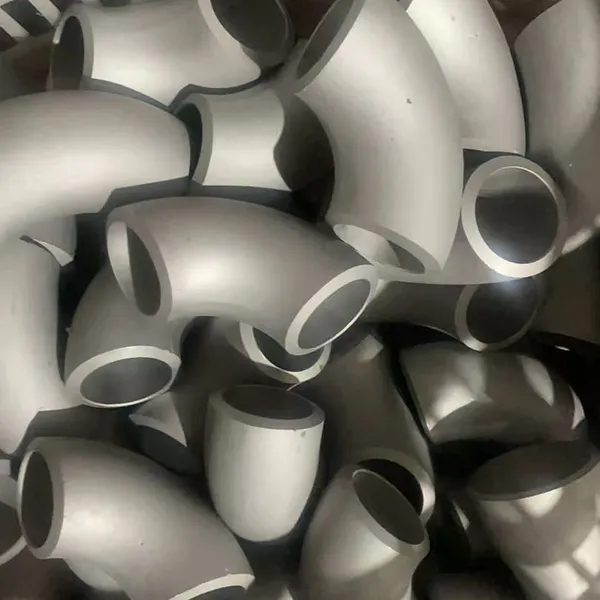
 Stainless Steel Elbow Welded Elbow 45/90/180-degree Seamless Pressed Elbow Long Radius Elbow Short Radius Elbow WholesaleNegotiableMOQ: 1 Piece
 -
316L/1.4405 Seamless Stainless Steel PipeNegotiableMOQ: 2 Meters
-
310s 440 Seamless Sanitary Piping Price 321 904l 201 20 Inch Seamless Steel Pipe A554 Stainless Steel PipeNegotiableMOQ: 1 Piece
-
China Brand ZZ Wholesale 304L 316 316L Welded Austenitic Piping Stainless Steel Pipe SupplierNegotiableMOQ: 2 Meters
-
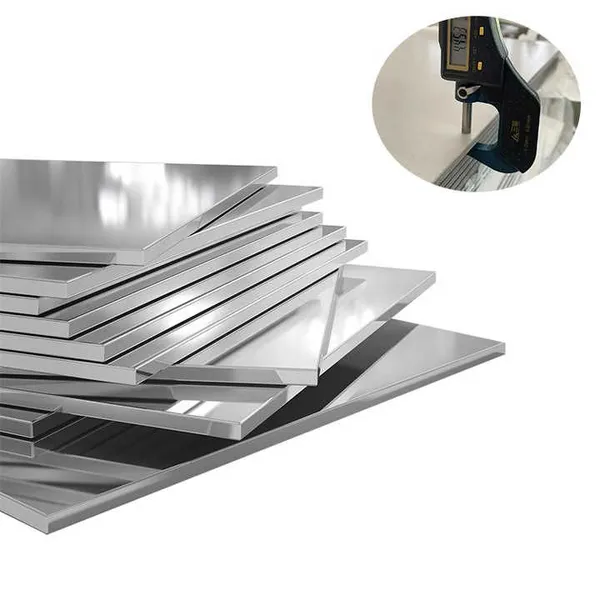
304/304L/316/409/410/904L/2205/2507/310H Premium Stainless Steel Sheets Supplier Custom Sizes & FinishesUS$ 1.72MOQ: 1 Ton
-
Stainless Steel ASME B16.9 Sch 45 90 Degree Pipe Fittings ElbowUS$ 8MOQ: 1 Piece
-
China Brand Zz 304L 316/316L GB En JIS Standard Thin Wall Welded Stainless Steel Water Pipe/TubeNegotiableMOQ: 2 Meters
-
BA 4 Inch 6 Inch 8 Inch 201 304 304L 316 316L Welded Seamless Stainless Steel PipeNegotiableMOQ: 2 Meters
-
ASME B36.19M-2004 SCH40S Stainless Steel Pipe - Complies With EU 3.1 CertificationUS$ 1 - 650MOQ: 1 Piece
-
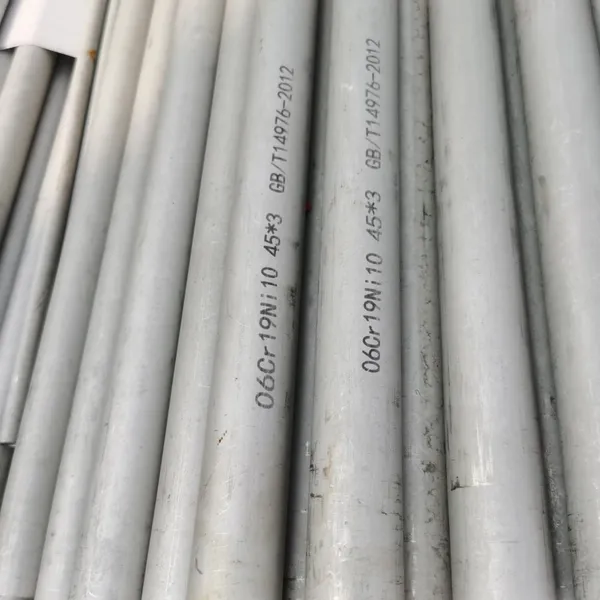
Factory TP309/TP309S/TP309H (UNS30900) Seamless Stainless Steel Pipe and Tube for Boiler BafflesUS$ 8MOQ: 200 Kilograms
-
TP347/TP347H/1.4961/S34709 Seamless Stainless Steel Pipe for UseNegotiableMOQ: 2 Meters
-
China 304 316 Stainless Steel Sanitary Welded Tube Food Grade Sanitary Grade Welded Pipe PolishingNegotiableMOQ: 1 Piece
-
China Manufacture Stainless Steel 316L Ba Seamless Welded Steel Pipe TubesUS$ 1760 - 1860MOQ: 5 Tons
-
316L/1.4405 Seamless Stainless Steel PipeNegotiableMOQ: 2 Meters
-
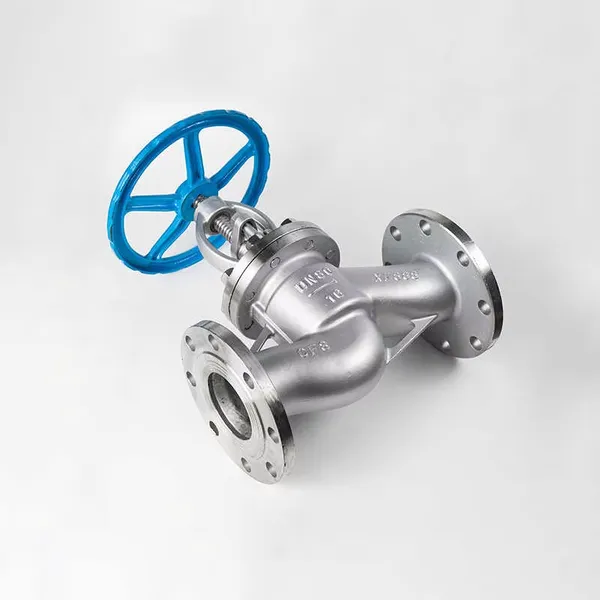
Stainless Steel Globe Valve – High Durability & Corrosion ResistanceNegotiableMOQ: 1 Piece
-
1.4529 Stainless Steel Flat Plate for Chemical Processing EquipmentUS$ 25 - 35MOQ: 1 Kilogram
-
Color Coated Steel Panels for Warehouse Partition Walls (Fireproof Grade)US$ 1 - 1.2MOQ: 50 Kilograms
-
Custom Width (600mm-1250mm) Colored Steel Coil With Scratch ResistanceUS$ 1 - 1.2MOQ: 50 Kilograms
-
0.5mm-3.0mm Colored Coated Steel Sheet With PVDF/Polyester CoatingUS$ 1 - 1.2MOQ: 50 Kilograms
-
JIS G 3322 Compliant Colored Coils With Third-Party Inspection ReportUS$ 1 - 1.2MOQ: 50 Kilograms