
 Business License

Types, Structures, Advantages and Disadvantages of Partition-Type Heat Exchangers
I. Tubular Heat Exchangers
1. Coiled Tube Heat Exchangers
(1) Immersed Coiled Tube Heat Exchanger:
Structure: This type of heat exchanger is mostly made up of metal tubes wound around, or formed in various configurations to fit the container, and immersed in the liquid inside the container.
Advantages: Simple structure, easy to prevent corrosion, and capable of withstanding high pressure.
Disadvantages: Due to the much larger volume of the container compared to the tubes, the surface heat transfer coefficient of the fluid outside the tubes is smaller; it is not convenient for cleaning inside the tubes.
(2) Spray-Type Heat Exchanger:
Structure: The spray-type heat exchanger has the heat exchange tubes arranged in rows on a steel frame, with the hot fluid flowing inside the tubes, and the cooling water sprayed evenly from the above spray device.
Advantages: Convenient for maintenance and cleaning, and has a better heat transfer effect.
Disadvantages: The spraying is not uniform.
2. Tubular Heat Exchanger:
Structure: The tubular heat exchanger is made by connecting two different-sized standard tubes with pipe fittings into concentric circles, and then connecting multiple sections of the tubular heat exchanger in series with 180° elbow pipes. Each section of the tubular heat exchanger is called a pass, and the number of passes can be increased or decreased according to the heat transfer requirements. The effective length of each pass is 4-6m. If the tube is too long, the tube will bend downward, causing an uneven distribution of fluid in the ring.
Advantages: Simple structure; capable of withstanding high pressure; the heat transfer area can be increased or decreased according to the requirements; choosing the inner and outer diameters of the tubes appropriately can make the fluid velocity larger; and both fluids flow in opposite directions, which is conducive to heat transfer.
Disadvantages: There are many tube joints, which are prone to leakage; the heat transfer area per unit length is relatively small.
3. Tube Bundle Heat Exchanger:
(1) Fixed Tube Sheet Heat Exchanger:
Structure: The tube sheet at both ends is connected to the shell as a whole, and the heat exchange tubes are straight tubes fixed on the tube sheets.
Advantages: Larger heat transfer area per unit volume and better heat transfer effect; simple structure, low cost, wide range of materials for manufacturing, and greater operational flexibility.
Disadvantages: The shell side is not easy to maintain and clean, so the shell-side fluid should be clean and not prone to scaling. When the temperature difference between the two fluids is large, heat compensation should be considered.
(2) U-Type Tube Heat Exchanger:
Structure: There is only one tube sheet, and the heat exchange tubes are U-shaped tubes, fixed on the tube sheet. When the tube is heated (or cooled), the tube bundle can freely expand, and is not related to the expansion of the shell. The shell does not require heat compensation.
Advantages: The structure is also simple, light weight, suitable for high-temperature and high-pressure applications.
Disadvantages: The inner cleaning of the tube is relatively difficult, so the fluid passing through the tube must be clean; and because the tube requires a certain bending radius, the utilization rate of the tube sheet is lower than that of the fixed tube sheet type or U-type tube heat exchanger.
(3) Floating Head Heat Exchanger:
Structure: One of the tube sheets is not fixedly connected to the shell, and the end is called the floating head. When the tube is heated (or cooled), the tube bundle along with the floating head can freely expand, and is not related to the expansion of the shell.
Advantages: The tube bundle can be withdrawn from the shell, making it convenient for cleaning and maintenance.
Disadvantages: Compared with the fixed tube sheet type and U-type tube heat exchanger, it is more complex in structure and more expensive.
II. Finned Heat Exchanger:
1. Finned Tube Heat Exchanger
Structure: The finned heat exchanger has the characteristic of installing radial or axial fins on the surface of the tube, divided into high fins and low fins.
Advantages: This type of heat exchanger can significantly improve the gas heat transfer effect, reducing the volume and metal material of the heat exchanger.
Disadvantages: The manufacturing process is complex and the cost is high. The fluid passing through the fin side must be clean, as cleaning is difficult.
Fin Plate Heat Exchanger:
Structure: Between two parallel thin metal plates (spacer plates), there are corrugated metal fins, and both sides are sealed by side strips, forming a unit. Different stacking and appropriate arrangement of each unit, and then fixed by brazing, can obtain the commonly used counter-flow, parallel-flow and cross-flow plate-fin type heat exchangers. The assembly pieces are called cores or plate bundles. As shown in Figure 4-51. Attach the manifold box with fluid inlet and outlet to the plate beam, and it becomes a plate-fin heat exchanger. Currently, the common fin types include smooth straight fin, aluminum tooth fin, and porous fin.
Advantages: High overall heat transfer coefficient, good heat transfer effect; compact structure; lightweight and sturdy; adaptable and wide operating range.
Disadvantages: Due to the small flow channels of the equipment, it is prone to clogging, and the pressure drop is increased; once the heat exchanger is fouled, cleaning and maintenance are very difficult, so the treated materials should be relatively clean or pre-treated; since the baffles and fins are made of thin aluminum sheets, the medium should not corrode aluminum.
(III) Jacketed heat exchanger:
Structure: The heat exchanger is installed outside the container, and a sealed space is formed between the jacket and the container wall, serving as the passage for the heat transfer medium or cooling medium.
Advantages: Jacketed heat exchangers are mainly used for heating or cooling in reaction processes.
Disadvantages: The heat transfer coefficient is low, and the heat transfer surface is limited by the container, so they are suitable for occasions with a relatively small heat transfer capacity. To improve its heat transfer performance, a stirrer can be installed inside the container to make the liquid in the container undergo forced convection. To make up for the lack of heat transfer surface, a coil pipe can also be installed inside the container.
(IV) Plate heat exchanger:
Structure: The plate heat exchanger is a new type of efficient heat exchanger composed of a series of metal plates with a certain corrugated shape. Thin rectangular channels are formed between the plates, and heat exchange is carried out through the plates. The plate heat exchanger is an ideal equipment for heat exchange between liquid-liquid or liquid-vapor.
Advantages: It has high heat transfer efficiency, low heat loss, compact structure, light weight and small size, convenient installation and cleaning, wide application, and long service life. Under the same pressure loss conditions, its heat transfer coefficient is 3-5 times higher than that of the tubular heat exchanger, and the area is one-third of the tubular heat exchanger, with a heat recovery rate of over 90%.
Disadvantages: Small capacity; the working pressure should not be too high, the medium temperature should not be too high, and there is a possibility of leakage. The spiral plate heat exchanger uses sealing gaskets for sealing, and the working pressure generally should not exceed 2.5 MPa, and the medium temperature should be below 250°C; otherwise, there is a possibility of leakage; due to the narrow channels between the plates, which are usually only 2-5 mm, when the heat transfer medium contains large particles or fibrous substances, it is prone to block the channels between the plates.
(V) Spiral plate heat exchanger:
Structure: This equipment is formed by rolling two plates, forming two uniform spiral channels. The two heat transfer media can flow in full counter-current, greatly enhancing the heat transfer effect. Even for small temperature differences between the two media, an ideal heat transfer effect can be achieved.
Advantages: The spiral plate heat exchanger has a compact structure, a large heat transfer surface per unit volume, such as a spiral plate heat exchanger with a diameter of ¢1500mm and a height of 1200mm, the heat transfer surface can reach 130 m2; the fluid can have a relatively high flow velocity in the spiral plate, and the laminar layer is thin, so the heat transfer coefficient is large and the heat transfer efficiency is high; in addition, due to the high flow velocity, dirt is not easy to adhere; the resistance is small.
Disadvantages: The spiral plate heat exchanger requires high welding quality and is difficult to maintain. It is heavy and has poor rigidity. Special attention should be paid during transportation and installation of the spiral plate heat exchanger.
Recently Posted
-
Does the stainless steel welded pipe have specific temperature requirements during the solution heat
January 20, 2026Solution heat treatment involves heating stainless steel to a high temperature and then rapidly cooling it to achieve an oversatur Read More
 -
Can stainless steel welded pipes be made into thick pipes
January 20, 2026With the improvement of high-quality welding technology and increasingly strict weld inspection, the application fields of s Read More
 -
Three types of commonly available food-grade stainless steel on the market
January 20, 2026The common food-grade stainless steel pipes are mainly composed of iron, chromium and carbon and other elements. Household stainle Read More
 -
What are the requirements for stainless steel welding pipe production equipment
January 20, 2026As is well known, stainless steel welded pipes have been widely used in various industries such as machinery, chemical engineering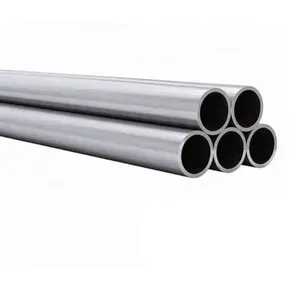 Read More

Contact Us
Recommended Products
-
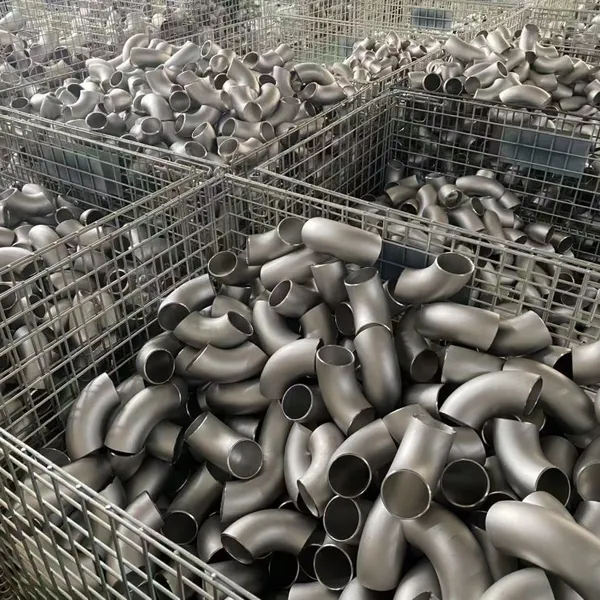
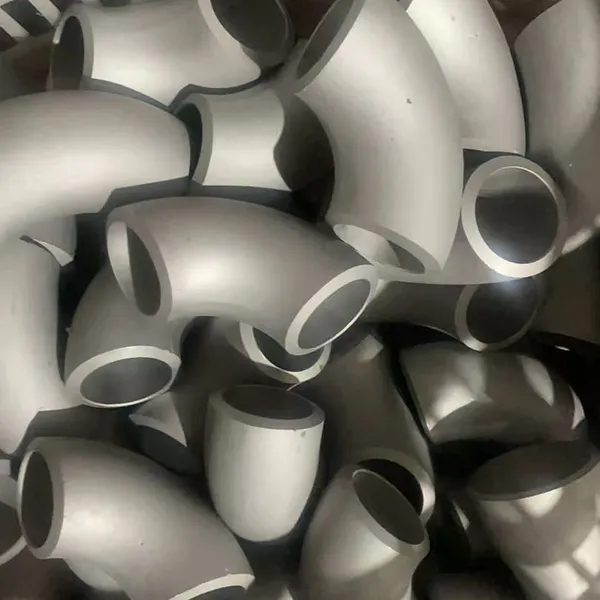
 Stainless Steel Elbow Welded Elbow 45/90/180-degree Seamless Pressed Elbow Long Radius Elbow Short Radius Elbow WholesaleNegotiableMOQ: 1 Piece
 -
316L/1.4405 Seamless Stainless Steel PipeNegotiableMOQ: 2 Meters
-
310s 440 Seamless Sanitary Piping Price 321 904l 201 20 Inch Seamless Steel Pipe A554 Stainless Steel PipeNegotiableMOQ: 1 Piece
-
China Brand ZZ Wholesale 304L 316 316L Welded Austenitic Piping Stainless Steel Pipe SupplierNegotiableMOQ: 2 Meters
-
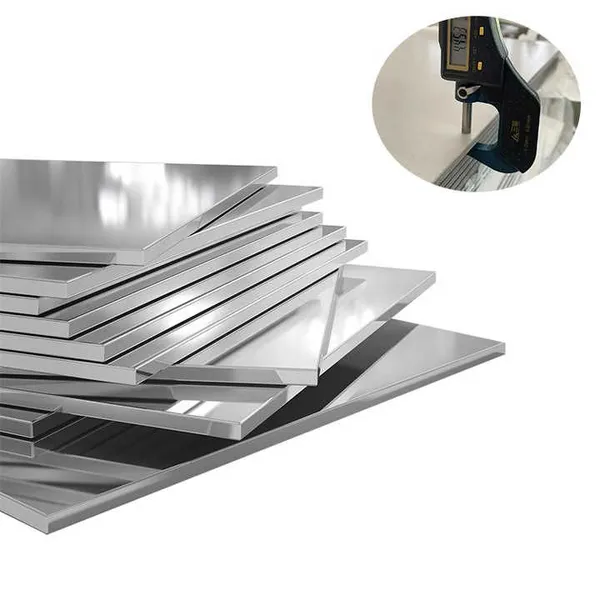
304/304L/316/409/410/904L/2205/2507/310H Premium Stainless Steel Sheets Supplier Custom Sizes & FinishesUS$ 1.72MOQ: 1 Ton
-
Stainless Steel ASME B16.9 Sch 45 90 Degree Pipe Fittings ElbowUS$ 8MOQ: 1 Piece
-
China Brand Zz 304L 316/316L GB En JIS Standard Thin Wall Welded Stainless Steel Water Pipe/TubeNegotiableMOQ: 2 Meters
-
BA 4 Inch 6 Inch 8 Inch 201 304 304L 316 316L Welded Seamless Stainless Steel PipeNegotiableMOQ: 2 Meters
-
ASME B36.19M-2004 SCH40S Stainless Steel Pipe - Complies With EU 3.1 CertificationUS$ 1 - 650MOQ: 1 Piece
-
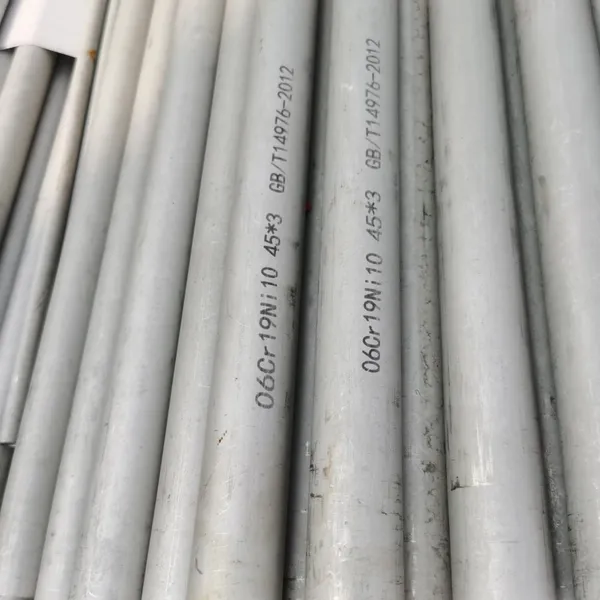
Factory TP309/TP309S/TP309H (UNS30900) Seamless Stainless Steel Pipe and Tube for Boiler BafflesUS$ 8MOQ: 200 Kilograms
-
TP347/TP347H/1.4961/S34709 Seamless Stainless Steel Pipe for UseNegotiableMOQ: 2 Meters
-
China 304 316 Stainless Steel Sanitary Welded Tube Food Grade Sanitary Grade Welded Pipe PolishingNegotiableMOQ: 1 Piece
-
China Manufacture Stainless Steel 316L Ba Seamless Welded Steel Pipe TubesUS$ 1760 - 1860MOQ: 5 Tons
-
316L/1.4405 Seamless Stainless Steel PipeNegotiableMOQ: 2 Meters
-
Stainless Steel Globe Valve – High Durability & Corrosion ResistanceNegotiableMOQ: 1 Piece
-
1.4529 Stainless Steel Flat Plate for Chemical Processing EquipmentUS$ 25 - 35MOQ: 1 Kilogram
-
Color Coated Steel Panels for Warehouse Partition Walls (Fireproof Grade)US$ 1 - 1.2MOQ: 50 Kilograms
-
Custom Width (600mm-1250mm) Colored Steel Coil With Scratch ResistanceUS$ 1 - 1.2MOQ: 50 Kilograms
-
0.5mm-3.0mm Colored Coated Steel Sheet With PVDF/Polyester CoatingUS$ 1 - 1.2MOQ: 50 Kilograms
-
JIS G 3322 Compliant Colored Coils With Third-Party Inspection ReportUS$ 1 - 1.2MOQ: 50 Kilograms