
 Business License

Why is it not recommended to use 304 material for bolts
(1) What are the basic differences among 304, 304L, 316, and 316L materials?
304, 304L, 316, and 316L are the common types of stainless steel materials used in flange joints (including flanges, sealing elements, and fasteners).
304, 304L, 316, and 316L are the stainless steel type designations according to the American material standards (ANSI or ASTM), belonging to the 300 series of austenitic stainless steel. The corresponding grades corresponding to domestic material standards (GB/T) are 06Cr19Ni10 (304), 022Cr19Ni10 (304L), 06Cr17Ni12Mo2 (316), and 022Cr17Ni12Mo2 (316L). Generally, this type of stainless steel is collectively referred to as 18-8 stainless steel.
Refer to Table 1. Due to the different alloy elements added and the amount of addition, the physical and mechanical properties of 304, 304L, 316, and 316L are also different. Compared with ordinary stainless steel, they have excellent corrosion resistance, heat resistance, and processing performance. The corrosion resistance of 304L is similar to that of 304, but because the carbon content of 304L is lower than that of 304, its intergranular corrosion resistance is stronger. 316 and 316L are molybdenum-containing stainless steel. Due to the addition of molybdenum elements, their corrosion resistance and heat resistance are better than those of 304 and 304L. Similarly, because the carbon content of 316L is lower than that of 316, its anti-crystalline corrosion resistance is better. The mechanical strength of this type of austenitic stainless steel, 304, 304L, 316, and 316L, is low. The room temperature yield strength of 304 is 205 MPa, 304L is 170 MPa; 316's room temperature yield strength is 210 MPa, and 316L is 200 MPa. Therefore, the bolts made from them belong to the low-strength grade bolts.
Table 1 Carbon content, % Room temperature yield strength, MPa Recommended maximum operating temperature, °C
304 ≤ 0.08 205 816
304L ≤ 0.03 170 538
316 ≤ 0.08 210 816
316L ≤ 0.03 200 538
(2) Why should flange joints not use bolts made of materials such as 304 and 316?
As mentioned in the previous lectures, the reasons for not using bolts of such materials for flange joints are as follows: Firstly, due to the internal pressure, the sealing surfaces of the two flanges separate, resulting in a corresponding reduction in the stress of the gasket. Secondly, in high-temperature conditions, the gasket undergoes creep relaxation or the bolt itself undergoes creep, causing the bolt force to relax as well. This also leads to a decrease in the stress of the gasket, so that the flange joint may leak and fail.
In actual operation, bolt force relaxation is inevitable. The initial tightened bolt force will always drop over time. Especially for flange joints under high-temperature and severe cyclic conditions, after 10,000 hours of operation, the bolt load loss often exceeds 50%, and it continues to decrease with the passage of time and the increase in temperature.
When the flange and the bolt are made of different materials, especially when the flange is carbon steel and the bolt is stainless steel, due to the different thermal expansion coefficients of the bolt and the flange (for example, at 50℃, the thermal expansion coefficient of stainless steel (16.51×10⁻⁵/℃) is larger than that of carbon steel (11.12×10⁻⁵/℃)), after the device is heated, when the expansion of the flange is less than that of the bolt, after the deformation coordination, the elongation of the bolt decreases, causing the bolt force to relax, which may lead to leakage of the flange joint. Therefore, when connecting flanges and pipe flanges in high-temperature equipment, especially when the thermal expansion coefficients of the flange and the bolt are different, it is advisable to make the thermal expansion coefficients of the two materials as close as possible.
From (1), it can be seen that the mechanical strength of austenitic stainless steels such as 304 and 316 is low. The room-temperature yield strength of 304 is only 205 MPa, and that of 316 is only 210 MPa. Therefore, in order to enhance the anti-loosening and anti-fatigue capabilities of the bolts, measures such as increasing the installation bolt force are adopted. As will be discussed in the subsequent lectures, when the maximum installation bolt force is used, the requirement is for the installation bolt stress to reach 70% of the yield strength of the bolt material. Thus, the strength grade of the bolt material must be increased, and high-strength or medium-strength alloy steel bolt materials must be used. It is obvious that, except for cast iron, non-metallic flanges or rubber gaskets, for flanges with high pressure ratings or semi-metallic and metallic flange gaskets with high stress, bolts made of low-strength materials such as 304 and 316 cannot meet the sealing requirements due to insufficient bolt force.
Here, it is particularly important to note that in the American stainless steel bolt material standards, 304 and 316 have two categories each, namely B8 Cl.1 and B8 Cl.2 for 304 and B8M Cl.1 and B8M Cl.2 for 316. Cl.1 undergoes carbide solid solution treatment, while Cl.2 undergoes both carbide solid solution treatment and strain strengthening treatment. Although there is no fundamental difference in corrosion resistance between B8 Cl.2 and B8 Cl.1, the mechanical strength of B8 Cl.2 is significantly improved compared to B8 Cl.1. For example, the yield strength of a 3/4" B8 Cl.2 bolt material is 550 MPa, while the yield strength of all diameters of B8 Cl.1 bolt materials is only 205 MPa, a difference of more than twice. The bolt materials in the domestic standard 06Cr19Ni10 (304) and 06Cr17Ni12Mo2 (316) are equivalent to B8 Cl.1 and B8M Cl.1. [Note: S30408 in GB/T 150.3 "Pressure Vessels - Part 3 Design" is equivalent to B8 Cl.2; S31608 is equivalent to B8M Cl.1.
Given the above reasons, in GB/T 150.3 and GB/T 38343 "Installation Technical Specifications for Flange Connections", it is stipulated that the bolts for pressure-bearing equipment flanges and pipe flange connections are not recommended to use the commonly used 304 (B8 Cl.1) and 316 (B8M Cl.1) materials, especially in high-temperature and severe cyclic conditions, they should be replaced with B8 Cl.2 (S30408) and B8M Cl.2 to avoid low installation bolt force.
It is worth noting that when using 304 or 316 low-strength bolt materials, even during the installation stage, due to the lack of torque control, the bolt may have exceeded the material's yield strength and even broken. Naturally, if leakage occurs during the pressure test or during operation, even if the bolts are tightened further, the bolt force cannot rise and cannot prevent the leakage. Moreover, these bolts cannot be reused after disassembly because the bolts have undergone permanent deformation, the bolt cross-sectional size has decreased, and reinstallation is prone to breakage.
Recently Posted
-
Does the stainless steel welded pipe have specific temperature requirements during the solution heat
January 20, 2026Solution heat treatment involves heating stainless steel to a high temperature and then rapidly cooling it to achieve an oversatur Read More
 -
Can stainless steel welded pipes be made into thick pipes
January 20, 2026With the improvement of high-quality welding technology and increasingly strict weld inspection, the application fields of s Read More
 -
Three types of commonly available food-grade stainless steel on the market
January 20, 2026The common food-grade stainless steel pipes are mainly composed of iron, chromium and carbon and other elements. Household stainle Read More
 -
What are the requirements for stainless steel welding pipe production equipment
January 20, 2026As is well known, stainless steel welded pipes have been widely used in various industries such as machinery, chemical engineering Read More

Contact Us
Recommended Products
-
 Stainless Steel Elbow Welded Elbow 45/90/180-degree Seamless Pressed Elbow Long Radius Elbow Short Radius Elbow WholesaleNegotiableMOQ: 1 Piece
 -
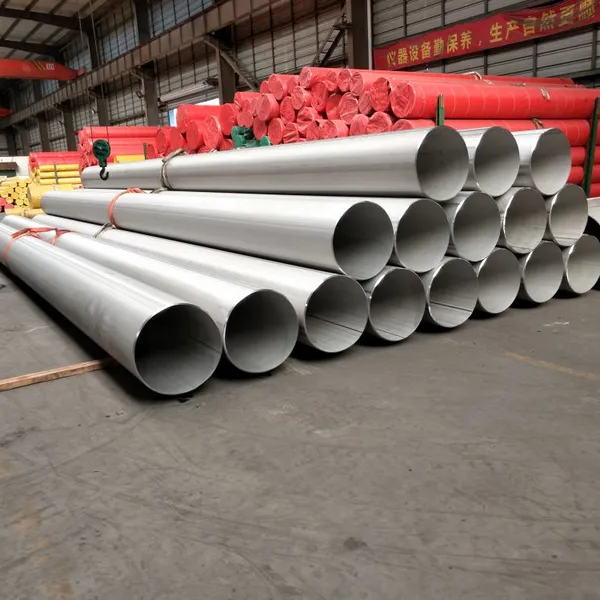
316L/1.4405 Seamless Stainless Steel PipeNegotiableMOQ: 2 Meters
-
310s 440 Seamless Sanitary Piping Price 321 904l 201 20 Inch Seamless Steel Pipe A554 Stainless Steel PipeNegotiableMOQ: 1 Piece
-
China Brand ZZ Wholesale 304L 316 316L Welded Austenitic Piping Stainless Steel Pipe SupplierNegotiableMOQ: 2 Meters
-
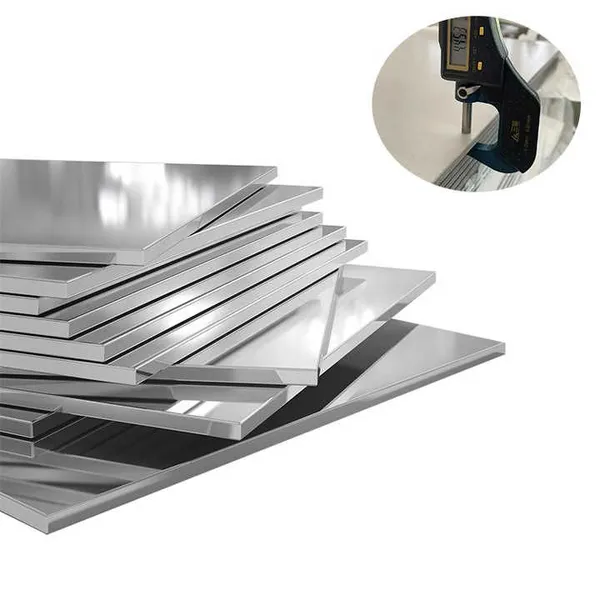
304/304L/316/409/410/904L/2205/2507/310H Premium Stainless Steel Sheets Supplier Custom Sizes & FinishesUS$ 1.72MOQ: 1 Ton
-
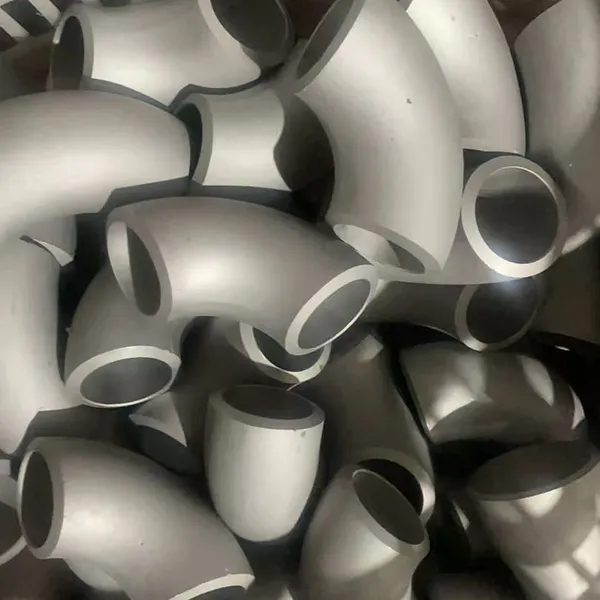
Stainless Steel ASME B16.9 Sch 45 90 Degree Pipe Fittings ElbowUS$ 8MOQ: 1 Piece
-
China Brand Zz 304L 316/316L GB En JIS Standard Thin Wall Welded Stainless Steel Water Pipe/TubeNegotiableMOQ: 2 Meters
-
BA 4 Inch 6 Inch 8 Inch 201 304 304L 316 316L Welded Seamless Stainless Steel PipeNegotiableMOQ: 2 Meters
-
ASME B36.19M-2004 SCH40S Stainless Steel Pipe - Complies With EU 3.1 CertificationUS$ 1 - 650MOQ: 1 Piece
-
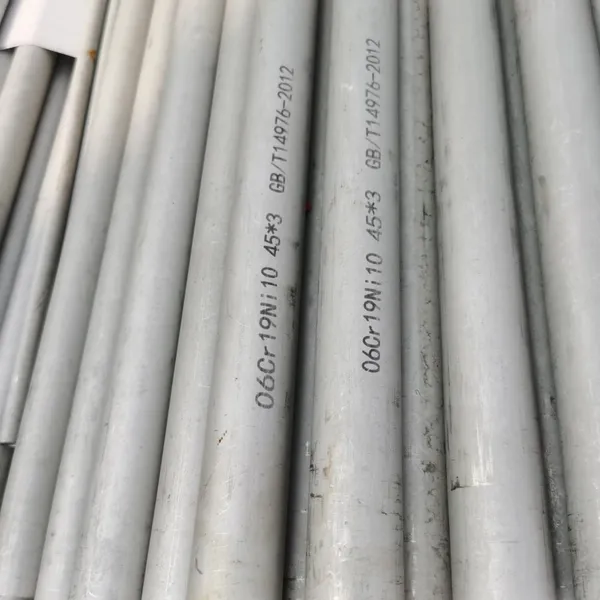
Factory TP309/TP309S/TP309H (UNS30900) Seamless Stainless Steel Pipe and Tube for Boiler BafflesUS$ 8MOQ: 200 Kilograms
-
TP347/TP347H/1.4961/S34709 Seamless Stainless Steel Pipe for UseNegotiableMOQ: 2 Meters
-
China 304 316 Stainless Steel Sanitary Welded Tube Food Grade Sanitary Grade Welded Pipe PolishingNegotiableMOQ: 1 Piece
-
China Manufacture Stainless Steel 316L Ba Seamless Welded Steel Pipe TubesUS$ 1760 - 1860MOQ: 5 Tons
-
316L/1.4405 Seamless Stainless Steel PipeNegotiableMOQ: 2 Meters
-
Stainless Steel Globe Valve – High Durability & Corrosion ResistanceNegotiableMOQ: 1 Piece
-
1.4529 Stainless Steel Flat Plate for Chemical Processing EquipmentUS$ 25 - 35MOQ: 1 Kilogram
-
Color Coated Steel Panels for Warehouse Partition Walls (Fireproof Grade)US$ 1 - 1.2MOQ: 50 Kilograms
-
Custom Width (600mm-1250mm) Colored Steel Coil With Scratch ResistanceUS$ 1 - 1.2MOQ: 50 Kilograms
-
0.5mm-3.0mm Colored Coated Steel Sheet With PVDF/Polyester CoatingUS$ 1 - 1.2MOQ: 50 Kilograms
-
JIS G 3322 Compliant Colored Coils With Third-Party Inspection ReportUS$ 1 - 1.2MOQ: 50 Kilograms