
 Business License

Introduce sanitary grade stainless steel pipes and stainless steel pipes of BA grade
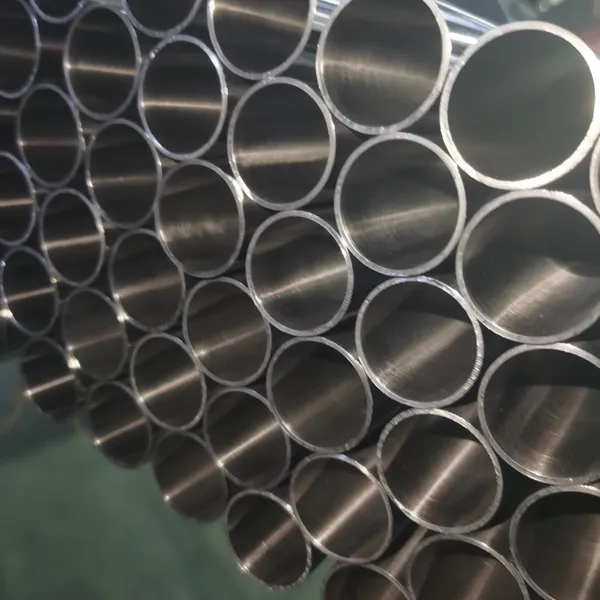
Hygienic-grade stainless steel pipes and stainless steel pipes of BA grade both fall under the category of special types of stainless steel pipes. There are significant differences in production processes, surface treatments, and application scenarios. The following is a detailed introduction:
1. Sanitary Grade Stainless Steel Pipes
Definition and Characteristics
Definition: Primarily used in industries with extremely high hygiene requirements, such as food, beverages, pharmaceuticals, healthcare, cosmetics, etc., they must meet strict hygiene standards and cleanliness requirements. Feature:
Pure material: Typically uses austenitic stainless steels such as 304 and 316L, with extremely low impurity content (such as sulfur and phosphorus), avoiding contamination of the medium.
High surface finish: The inner surface roughness Ra is ≤ 0.8 μm (even lower than 0.4 μm), the outer surface is aesthetically pleasing, facilitating cleaning and disinfection.
Strict welding process: Uses automatic track welding, with smooth welds, no pores, slag inclusions, etc., reducing the risk of medium residue and bacterial growth.
Strong corrosion resistance: Can resist corrosion from various acid and alkali media and disinfectants, ensuring safety during long-term use.
Production process
Material selection: Selects high-purity stainless steel billets, strictly controlling chemical composition.
Forming method: Through cold rolling, cold drawing or hot extrusion to ensure the dimensional accuracy of the pipe (such as small diameter and wall thickness tolerances). Surface treatment:
Internal surface: Electrolytic polishing, mechanical polishing or passivation treatment are carried out to form a uniform passivation film, enhancing the corrosion resistance.
External surface: Can be polished, matte or mirror-finished according to requirements.
Cleaning and inspection: Cleaned with pure water or dedicated cleaning agents to remove oil stains, metal debris and other impurities, and undergo strict inspections such as endoscope examination, water pressure test and surface roughness detection. Application scenario
Food industry: Conveying pipelines for beverages such as milk and juice, pipelines for beer brewing equipment.
Pharmaceutical industry: Pipelines for drug liquid transportation, purification water system, sterile formulation production lines.
Medical field: Gas pipelines in hospital clean rooms, medical pure water system.
Cosmetics production: Conveying pipelines for raw materials such as skin care products and shampoo.
II. Stainless Steel Tube BA Grade (Bright Annealed Tube)
Definition and Characteristics
Definition: BA Grade (Bright Annealed) refers to stainless steel tubes processed through the bright annealing process. The surface appears a silvery white lustrous state, and is mainly used in scenarios where higher requirements are placed on surface quality and smoothness. Feature:
Surface is bright and beautiful: During the annealing process, the material is heated in a protective atmosphere (such as hydrogen or nitrogen) to avoid oxidation. There is no oxide layer on the surface, and the glossiness is good.
High dimensional accuracy: After cold rolling, the material is annealed again. The straightness and roundness of the pipe are better, and the wall thickness is uniform.
Mechanical properties are stable: The annealing treatment eliminates the internal stress generated during cold processing, improves the plasticity and toughness of the material, and facilitates subsequent processing (such as bending, expansion).
Better corrosion resistance: The surface passivation film is intact, but it is usually not as strict as the surface treatment of sanitary grade stainless steel pipes.
Production process
Cold rolling forming: Through multiple cold rolling processes, the pipe reaches the target size and surface finish.
Bright annealing: Heated to the annealing temperature (about 1050-1100℃) in a vacuum or protected atmosphere furnace, slowly cooled to prevent surface oxidation.
Cleaning and inspection: After annealing, degreasing, cleaning are carried out, and the surface quality and dimensional tolerance are checked. If necessary, polishing treatment is performed (but the inner surface usually does not undergo deep polishing). Application scenario
Electronic industry: Gas pipelines used in semiconductor manufacturing (such as nitrogen and argon) need to avoid contamination by impurities.
Medical devices: Some structural components of medical devices that require high surface smoothness but do not need strict hygiene standards.
Decoration industry: Pipes used in architectural decoration (such as railings and handrails), and furniture accessories, taking advantage of their shiny appearance.
Instrumentation and automation: Instrument conduits, pneumatic system pipelines, requiring a clean appearance and being resistant to rust.
III. Comparison and Summary of the Two
Picture One
IV. Extended Knowledge: Other Surface Treatment Grades of Stainless Steel Pipes
AP Grade (Acid-Washed Pipe): The surface is acid-washed to remove oxide scale, with a relatively rough texture. It is used in general industrial scenarios.
EP Grade (Electrolytic Polished Pipe): The inner surface is electro-polished with Ra ≤ 0.2 μm. It is mainly used for ultra-high purity media (such as high-purity gases and liquids in the semiconductor industry).
Mechanical Polished Pipe: Through mechanical grinding and polishing, the surface finish is between BA Grade and EP Grade, suitable for scenarios with moderate hygiene requirements.
If a specific type needs to be selected, it should be determined based on industry standards, medium characteristics, cleaning requirements, and cost budget in a comprehensive manner.
Recently Posted
-
Does the stainless steel welded pipe have specific temperature requirements during the solution heat
January 20, 2026Solution heat treatment involves heating stainless steel to a high temperature and then rapidly cooling it to achieve an oversatur Read More
 -
Can stainless steel welded pipes be made into thick pipes
January 20, 2026With the improvement of high-quality welding technology and increasingly strict weld inspection, the application fields of s Read More
 -
Three types of commonly available food-grade stainless steel on the market
January 20, 2026The common food-grade stainless steel pipes are mainly composed of iron, chromium and carbon and other elements. Household stainle Read More
 -
What are the requirements for stainless steel welding pipe production equipment
January 20, 2026As is well known, stainless steel welded pipes have been widely used in various industries such as machinery, chemical engineering Read More

Contact Us
Recommended Products
-
 Stainless Steel Elbow Welded Elbow 45/90/180-degree Seamless Pressed Elbow Long Radius Elbow Short Radius Elbow WholesaleNegotiableMOQ: 1 Piece
 -
316L/1.4405 Seamless Stainless Steel PipeNegotiableMOQ: 2 Meters
-
310s 440 Seamless Sanitary Piping Price 321 904l 201 20 Inch Seamless Steel Pipe A554 Stainless Steel PipeNegotiableMOQ: 1 Piece
-
China Brand ZZ Wholesale 304L 316 316L Welded Austenitic Piping Stainless Steel Pipe SupplierNegotiableMOQ: 2 Meters
-
304/304L/316/409/410/904L/2205/2507/310H Premium Stainless Steel Sheets Supplier Custom Sizes & FinishesUS$ 1.72MOQ: 1 Ton
-
Stainless Steel ASME B16.9 Sch 45 90 Degree Pipe Fittings ElbowUS$ 8MOQ: 1 Piece
-
China Brand Zz 304L 316/316L GB En JIS Standard Thin Wall Welded Stainless Steel Water Pipe/TubeNegotiableMOQ: 2 Meters
-
BA 4 Inch 6 Inch 8 Inch 201 304 304L 316 316L Welded Seamless Stainless Steel PipeNegotiableMOQ: 2 Meters
-
ASME B36.19M-2004 SCH40S Stainless Steel Pipe - Complies With EU 3.1 CertificationUS$ 1 - 650MOQ: 1 Piece
-
Factory TP309/TP309S/TP309H (UNS30900) Seamless Stainless Steel Pipe and Tube for Boiler BafflesUS$ 8MOQ: 200 Kilograms
-
TP347/TP347H/1.4961/S34709 Seamless Stainless Steel Pipe for UseNegotiableMOQ: 2 Meters
-
China 304 316 Stainless Steel Sanitary Welded Tube Food Grade Sanitary Grade Welded Pipe PolishingNegotiableMOQ: 1 Piece
-
China Manufacture Stainless Steel 316L Ba Seamless Welded Steel Pipe TubesUS$ 1760 - 1860MOQ: 5 Tons
-
316L/1.4405 Seamless Stainless Steel PipeNegotiableMOQ: 2 Meters
-
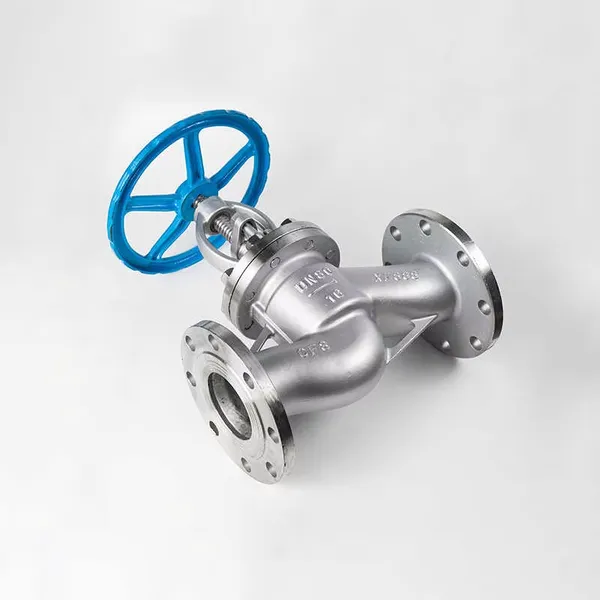
Stainless Steel Globe Valve – High Durability & Corrosion ResistanceNegotiableMOQ: 1 Piece
-
1.4529 Stainless Steel Flat Plate for Chemical Processing EquipmentUS$ 25 - 35MOQ: 1 Kilogram
-
Color Coated Steel Panels for Warehouse Partition Walls (Fireproof Grade)US$ 1 - 1.2MOQ: 50 Kilograms
-
Custom Width (600mm-1250mm) Colored Steel Coil With Scratch ResistanceUS$ 1 - 1.2MOQ: 50 Kilograms
-
0.5mm-3.0mm Colored Coated Steel Sheet With PVDF/Polyester CoatingUS$ 1 - 1.2MOQ: 50 Kilograms
-
JIS G 3322 Compliant Colored Coils With Third-Party Inspection ReportUS$ 1 - 1.2MOQ: 50 Kilograms