
 Business License

What are the surface treatment requirements for medical grade degreased stainless steel seamless
The core requirements for the surface treatment of medical de-greased seamless stainless steel tubes are: clean without residues, smooth surface, stable passivation, and bio-safety. They must also meet the requirements of medical contact safety, sterilization tolerance, and usage stability. The specific requirements are as follows:
Core requirements for degreasing treatment:
Thoroughly remove organic substances such as oils, oil stains, and cutting fluids adhering to the product during production and processing.
After degreasing, there should be no visible oil stains or oil spots on the surface. Under ultraviolet light or fluorescent detection, no fluorescent reaction should occur.
The residual amount of organic substances should comply with medical standards (typically ≤ 5mg/m²), and no residual cleaning agents (such as acid-base cleaning solutions) should be present.
The commonly used degreasing process is "alkaline degreasing + acid pickling + rinsing", and the final rinsing water should be neutral (pH 6.5 - 7.5).
2. Surface roughness requirements
For ordinary medical scenarios (such as infusion tubes, external devices): Inner and outer surface roughness Ra ≤ 0.8 μm.
For implantable devices (such as orthopedic screws, cardiovascular stents): Surface roughness Ra ≤ 0.2 μm (requires electrolytic polishing EP treatment).
The surface should be free of burrs, scratches, depressions, and oxide films. The depth of scratches shall not exceed 10% of the wall thickness, and there should be no sharp edges.
The inner wall should be smooth and uniform, avoiding steps, wrinkles, and preventing drug residue or bacterial growth.
3. Requirements for passivation treatment
After degreasing, a passivation treatment must be carried out to form a uniform and dense Cr₂O₃ passivation film (thickness 5-10nm).
The passivation film must be tested by the blue dot test: after adding the blue dot reagent, no blue dots should appear within 30 seconds, indicating that the passivation film is intact.
The passivation process should be environmentally friendly and non-toxic. Commonly used methods are nitric acid passivation or citric acid passivation. Avoid using passivation agents containing chromium (VI).
After passivation, thorough rinsing is required, with residual passivation solution ≤ the limit value to prevent chemical reactions with body fluids and drugs.
4. Containment of Pollutants and Residues
Solid pollutants such as metal debris, dust, fibers, etc. must comply with ISO 14644-1 Class 7 or higher standards. Particle pollutants should meet the standard of ≤ medical limit for heavy metal ions (such as lead, cadmium, mercury), and the amount of nickel ions released should be ≤ 0.5 μg/cm²/week (in accordance with ISO 10993-15).
There should be no visible rust, pitting, or color spots. The surface color should be uniform and consistent, and there should be no local oxidation or color change.
5. Sterilization Compatibility Requirements
After surface treatment, it must be able to withstand common medical sterilization methods, including high-temperature and high-pressure steam (134℃, 0.2MPa), ethylene oxide (EO), and gamma-ray sterilization.
After repeated sterilization (≥100 times), there should be no peeling, detachment, or cracking on the surface, and the passivation film remains intact. The corrosion resistance does not diminish.
After sterilization, there should be no odor or release of harmful substances, and it should not affect the stability of the drug or the tissue compatibility with the human body.
6. Compliance and Testing Requirements
The surface treatment must comply with ASTM A967 (standard for stainless steel passivation) and GB/T 25150 (specification for surface treatment of medical stainless steel).
A surface roughness test report, a degreasing cleanliness test report, and a passivation film integrity test report must be provided.
For medical devices in direct contact with the human body, the surface treatment must pass the relevant biological compatibility tests (such as cytotoxicity, sensitization, etc.) as per ISO 10993.
Recently Posted
-
Does the stainless steel welded pipe have specific temperature requirements during the solution heat
January 20, 2026Solution heat treatment involves heating stainless steel to a high temperature and then rapidly cooling it to achieve an oversatur Read More
 -
Can stainless steel welded pipes be made into thick pipes
January 20, 2026With the improvement of high-quality welding technology and increasingly strict weld inspection, the application fields of s Read More
 -
Three types of commonly available food-grade stainless steel on the market
January 20, 2026The common food-grade stainless steel pipes are mainly composed of iron, chromium and carbon and other elements. Household stainle Read More
 -
What are the requirements for stainless steel welding pipe production equipment
January 20, 2026As is well known, stainless steel welded pipes have been widely used in various industries such as machinery, chemical engineering Read More

Contact Us
Recommended Products
-
 Stainless Steel Elbow Welded Elbow 45/90/180-degree Seamless Pressed Elbow Long Radius Elbow Short Radius Elbow WholesaleNegotiableMOQ: 1 Piece
 -
316L/1.4405 Seamless Stainless Steel PipeNegotiableMOQ: 2 Meters
-
310s 440 Seamless Sanitary Piping Price 321 904l 201 20 Inch Seamless Steel Pipe A554 Stainless Steel PipeNegotiableMOQ: 1 Piece
-
China Brand ZZ Wholesale 304L 316 316L Welded Austenitic Piping Stainless Steel Pipe SupplierNegotiableMOQ: 2 Meters
-
304/304L/316/409/410/904L/2205/2507/310H Premium Stainless Steel Sheets Supplier Custom Sizes & FinishesUS$ 1.72MOQ: 1 Ton
-
Stainless Steel ASME B16.9 Sch 45 90 Degree Pipe Fittings ElbowUS$ 8MOQ: 1 Piece
-
China Brand Zz 304L 316/316L GB En JIS Standard Thin Wall Welded Stainless Steel Water Pipe/TubeNegotiableMOQ: 2 Meters
-
BA 4 Inch 6 Inch 8 Inch 201 304 304L 316 316L Welded Seamless Stainless Steel PipeNegotiableMOQ: 2 Meters
-
ASME B36.19M-2004 SCH40S Stainless Steel Pipe - Complies With EU 3.1 CertificationUS$ 1 - 650MOQ: 1 Piece
-
Factory TP309/TP309S/TP309H (UNS30900) Seamless Stainless Steel Pipe and Tube for Boiler BafflesUS$ 8MOQ: 200 Kilograms
-
TP347/TP347H/1.4961/S34709 Seamless Stainless Steel Pipe for UseNegotiableMOQ: 2 Meters
-
China 304 316 Stainless Steel Sanitary Welded Tube Food Grade Sanitary Grade Welded Pipe PolishingNegotiableMOQ: 1 Piece
-
China Manufacture Stainless Steel 316L Ba Seamless Welded Steel Pipe TubesUS$ 1760 - 1860MOQ: 5 Tons
-
316L/1.4405 Seamless Stainless Steel PipeNegotiableMOQ: 2 Meters
-
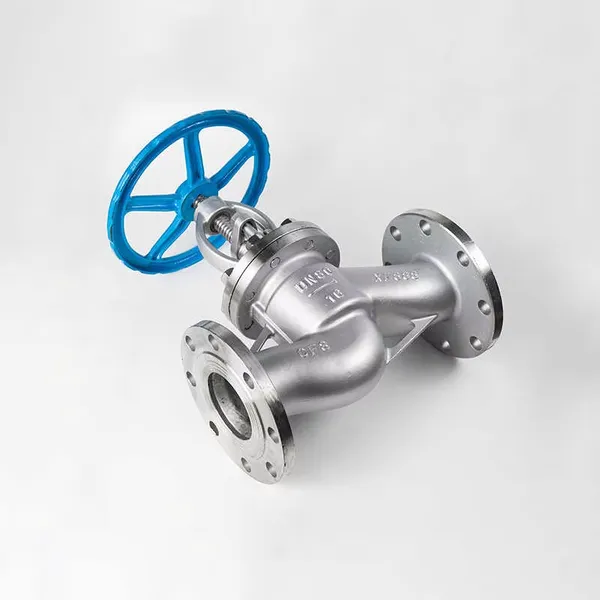
Stainless Steel Globe Valve – High Durability & Corrosion ResistanceNegotiableMOQ: 1 Piece
-
1.4529 Stainless Steel Flat Plate for Chemical Processing EquipmentUS$ 25 - 35MOQ: 1 Kilogram
-
Color Coated Steel Panels for Warehouse Partition Walls (Fireproof Grade)US$ 1 - 1.2MOQ: 50 Kilograms
-
Custom Width (600mm-1250mm) Colored Steel Coil With Scratch ResistanceUS$ 1 - 1.2MOQ: 50 Kilograms
-
0.5mm-3.0mm Colored Coated Steel Sheet With PVDF/Polyester CoatingUS$ 1 - 1.2MOQ: 50 Kilograms
-
JIS G 3322 Compliant Colored Coils With Third-Party Inspection ReportUS$ 1 - 1.2MOQ: 50 Kilograms