
 Business License

What are the application limitations of 304/304L stainless steel pipes in the LNG system?
The 304/304L stainless steel pipe, due to its certain low-temperature toughness and corrosion resistance, has applications in some low-temperature fields. However, in the LNG (liquefied natural gas, with a working temperature of approximately -162℃) system, its performance has significant shortcomings and its application is strictly limited. The following elaborates in detail from the aspects of low-temperature toughness, corrosion risk, and mechanical properties:
1. Insufficient low-temperature toughness, with a risk of brittle fracture
Core issue: In the LNG operating condition at -162℃, the impact toughness of 304/304L fails to meet safety requirements.
The brittle transition temperature (DBTT) of 304 stainless steel (unstabilized steel) is relatively high, typically ranging from -100℃ to -70℃. When the temperature drops to -162℃, its impact absorption energy (Ak) will sharply decrease to below 20J (even lower than 10J), which is far below the Ak ≥ 40J requirement for LNG systems (as per ASME B31.3 and other standards). This makes it prone to brittle fracture without plastic deformation, potentially leading to serious accidents such as leaks.
The low-temperature toughness of 304L (low-carbon type) is slightly better than that of 304, but it still cannot completely overcome the problem of brittle transition. The impact performance at -162℃ fluctuates significantly, and the toughness of the heat-affected zone (HAZ) in welding is even more pronounced, making it difficult to pass the low-temperature impact tests (such as the V-notch impact test).
Comparison: The commonly used materials in LNG systems, such as 304Lmod (modified 304L), 316L, and 9% Ni steel, have a DBTT (Deformation-Induced Breakdown Temperature) as low as below -196℃. At -162℃, the impact energy remains above 80J, effectively avoiding the risk of brittle fracture.
2. Limited resistance to low-temperature corrosion, susceptible to impurity erosion
Although methane is the main component in the LNG system, it may contain trace amounts of H₂S, CO₂, moisture, etc. At low temperatures, it is prone to form corrosive media (such as the mixture of liquid water and H₂S forming an acidic solution). The corrosion resistance of 304/304L is insufficient to cope with this:
Sulfide Stress Corrosion Cracking (SSCC): Although the Cr content (18-20%) in 304/304L can form a passive film, in the low-temperature and high-pressure environment with H₂S present, the passive film is prone to be destroyed, and its austenitic structure has a higher sensitivity to SSCC. Long-term use may result in intergranular or transgranular cracks.
Pitting and Crevice Corrosion: If there is a trace of chloride ions in the system (such as those brought in by seawater cooling leakage), the pitting resistance equivalent (PREN ≈ 18-20) of 304/304L is relatively low, far lower than that of 316L (PREN ≈ 24-26). It is more likely to undergo pitting corrosion at low temperatures (with higher ionic activity), especially at the crevices of flanges and valves.
III. Limitations of Welding and Processing Properties
Welding joint embrittlement: When welding 304/304L, if proper protection is not provided, it is prone to form Widmanstätten structure or ferrite segregation, resulting in a further decrease in the toughness of the welding joint at low temperatures. Moreover, the corrosion resistance of the weld zone may be reduced due to the loss of Cr and Ni, becoming a corrosion weak point.
The influence of cold work hardening: LNG pipelines often require bending and shaping during cold processing. After cold processing, 304/304L is prone to generating residual stress, and the austenitic structure may partially transform into martensite (especially 304), leading to a deterioration in low-temperature toughness and increasing the risk of stress corrosion cracking.
IV. Clear Limitations of Standards and Specifications
International design standards for LNG systems (such as ASME B31.3, EN 13480, API 620) have strict requirements for materials:
The specific requirement is that the low-temperature impact toughness of the steel used for the low-temperature equipment must meet -196℃: Ak ≥ 27J (the minimum value), and 304/304L usually cannot meet this standard.
For pipelines in contact with sulfur-containing LNG, low-alloy high-strength steel resistant to SSCC or nickel-based alloys should be used. 304/304L is excluded from the mainstream selection due to its sensitivity to SSCC.
Summary: The application scenarios of 304/304L in LNG systems are limited.
It can only be used in non-core, low-pressure, short-cycle auxiliary sections (such as the constant-temperature accessory connection pipes of LNG storage tanks, and the instrument pipelines away from the low-temperature zone), and it needs to strictly control the purity of the medium (without H₂S, Cl⁻) and the working temperature (not lower than -100℃).
The core systems (such as cryogenic storage tanks, main transportation pipelines, pump and valve connection pipes) must use dedicated cryogenic steel (such as 9% Ni steel) or high-alloy stainless steel (such as 316L, 304Lmod) to ensure safety and reliability.
Recently Posted
-
Does the stainless steel welded pipe have specific temperature requirements during the solution heat
January 20, 2026Solution heat treatment involves heating stainless steel to a high temperature and then rapidly cooling it to achieve an oversatur Read More
 -
Can stainless steel welded pipes be made into thick pipes
January 20, 2026With the improvement of high-quality welding technology and increasingly strict weld inspection, the application fields of s Read More
 -
Three types of commonly available food-grade stainless steel on the market
January 20, 2026The common food-grade stainless steel pipes are mainly composed of iron, chromium and carbon and other elements. Household stainle Read More
 -
What are the requirements for stainless steel welding pipe production equipment
January 20, 2026As is well known, stainless steel welded pipes have been widely used in various industries such as machinery, chemical engineering Read More

Contact Us
Recommended Products
-
 Stainless Steel Elbow Welded Elbow 45/90/180-degree Seamless Pressed Elbow Long Radius Elbow Short Radius Elbow WholesaleNegotiableMOQ: 1 Piece
 -
316L/1.4405 Seamless Stainless Steel PipeNegotiableMOQ: 2 Meters
-
310s 440 Seamless Sanitary Piping Price 321 904l 201 20 Inch Seamless Steel Pipe A554 Stainless Steel PipeNegotiableMOQ: 1 Piece
-
China Brand ZZ Wholesale 304L 316 316L Welded Austenitic Piping Stainless Steel Pipe SupplierNegotiableMOQ: 2 Meters
-
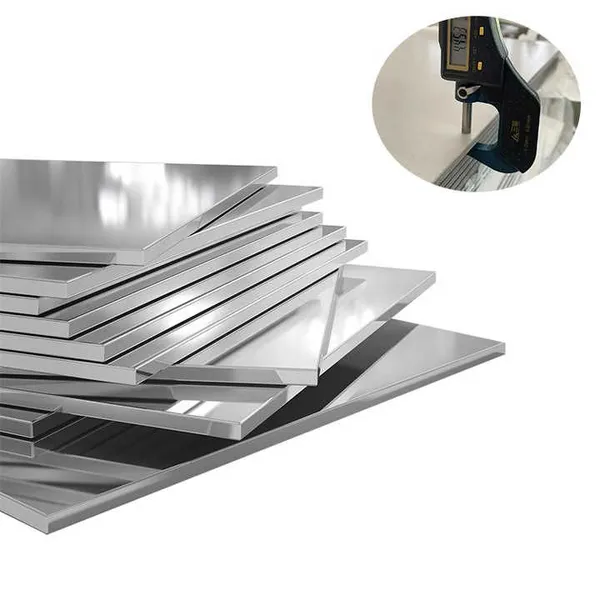
304/304L/316/409/410/904L/2205/2507/310H Premium Stainless Steel Sheets Supplier Custom Sizes & FinishesUS$ 1.72MOQ: 1 Ton
-
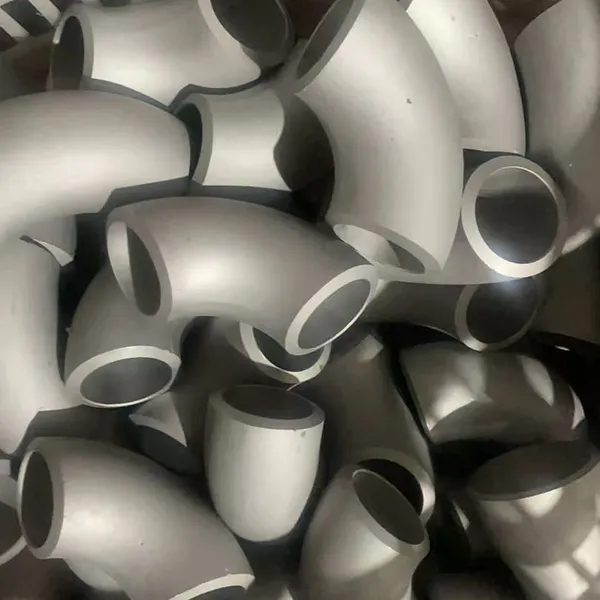
Stainless Steel ASME B16.9 Sch 45 90 Degree Pipe Fittings ElbowUS$ 8MOQ: 1 Piece
-
China Brand Zz 304L 316/316L GB En JIS Standard Thin Wall Welded Stainless Steel Water Pipe/TubeNegotiableMOQ: 2 Meters
-
BA 4 Inch 6 Inch 8 Inch 201 304 304L 316 316L Welded Seamless Stainless Steel PipeNegotiableMOQ: 2 Meters
-
ASME B36.19M-2004 SCH40S Stainless Steel Pipe - Complies With EU 3.1 CertificationUS$ 1 - 650MOQ: 1 Piece
-
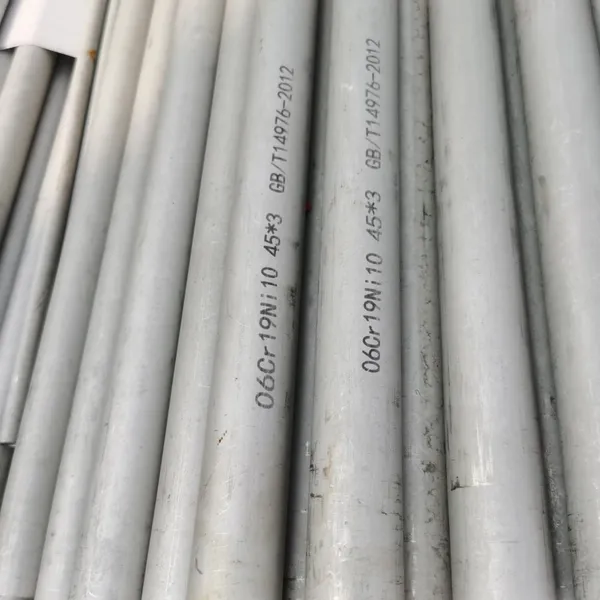
Factory TP309/TP309S/TP309H (UNS30900) Seamless Stainless Steel Pipe and Tube for Boiler BafflesUS$ 8MOQ: 200 Kilograms
-
TP347/TP347H/1.4961/S34709 Seamless Stainless Steel Pipe for UseNegotiableMOQ: 2 Meters
-
China 304 316 Stainless Steel Sanitary Welded Tube Food Grade Sanitary Grade Welded Pipe PolishingNegotiableMOQ: 1 Piece
-
China Manufacture Stainless Steel 316L Ba Seamless Welded Steel Pipe TubesUS$ 1760 - 1860MOQ: 5 Tons
-
316L/1.4405 Seamless Stainless Steel PipeNegotiableMOQ: 2 Meters
-
Stainless Steel Globe Valve – High Durability & Corrosion ResistanceNegotiableMOQ: 1 Piece
-
1.4529 Stainless Steel Flat Plate for Chemical Processing EquipmentUS$ 25 - 35MOQ: 1 Kilogram
-
Color Coated Steel Panels for Warehouse Partition Walls (Fireproof Grade)US$ 1 - 1.2MOQ: 50 Kilograms
-
Custom Width (600mm-1250mm) Colored Steel Coil With Scratch ResistanceUS$ 1 - 1.2MOQ: 50 Kilograms
-
0.5mm-3.0mm Colored Coated Steel Sheet With PVDF/Polyester CoatingUS$ 1 - 1.2MOQ: 50 Kilograms
-
JIS G 3322 Compliant Colored Coils With Third-Party Inspection ReportUS$ 1 - 1.2MOQ: 50 Kilograms