
 Business License

How can we prevent defects from occurring in stainless steel degreased seamless pipes during
To avoid the degreasing defects of stainless steel seamless tubes, it is necessary to start from four aspects: process parameters, reagent selection, equipment compatibility, and process monitoring. The core is to balance the cleaning efficiency and material protection. The specific measures are as follows:
1. Precise control of degreasing process parameters
Optimization of sandblasting degreasing
The abrasive material is selected as 0.05 - 0.2mm glass beads or plastic sand, instead of alumina abrasive. The sandblasting pressure is ≤ 0.4MPa, and the spraying angle is 45° - 60°. To avoid surface scratches (depth <0.1mm) and excessive roughness (Ra controlled within 1.6 - 2.5μm).
Ultrasound degreasing parameter limitations
Power is controlled within 500-800W (frequency 30-40kHz), degreasing time ≤ 15 minutes. Combined with 10L/min flow rate for spray rinsing, it reduces surface pitting caused by cavitation effect.
II. Selection of Degreasing Agents and Concentration Control
Improvement of Alkaline Degreasing Agents
Reduce the NaOH concentration to 8% - 12%, add 3% - 5% silicate corrosion inhibitors, control the temperature at 50 - 60℃, maintain the pH at 9 - 11, and avoid intergranular chromium deficiency (intergranular corrosion test corrosion rate <0.03mm/year).
Solvent degreasing alternative solution
Use isopropyl alcohol (purity ≥ 99.5%) or weakly alkaline water-based degreasing agent (containing EO-PO block copolymer), with residual content controlled to be less than 5mg/m², to reduce the risk of chemical corrosion.
III. Protective Design for Mechanical Degreasing Equipment
Roller Degreasing Anti-Deformation
For thin-walled tubes (with a wall thickness of less than 2mm), the rotational speed should be ≤ 10 rpm. Polyurethane pads should be installed on the inner wall of the roller, and the ellipticity should be controlled within 0.3% to prevent dimensional deviations caused by mechanical collisions.
Limitation of high-pressure water degreasing pressure
Using a rotating nozzle for uniform spraying, the pressure should be ≤ 40 MPa. The nozzle should be 10 to 15 cm away from the workpiece to prevent local impact from causing surface depressions (depth <0.05 mm).
IV. Process Monitoring and Post-Treatment Coordination
De-greasing Time Control
Within 30 minutes after de-greasing, use multi-stage spraying with deionized water (conductivity <10 μS/cm) to remove residual chemicals and prevent local accumulation of alkaline substances that could cause corrosion.
Material-specific protective measures
304/316L austenitic steel: Add 0.5% - 1% molybdate to the degreasing agent to prevent intergranular corrosion;
430 ferritic steel: Use a 40 - 50℃ neutral degreasing agent to avoid surface oxidation;
Dual-phase stainless steel: With an ultrasonic power of ≤ 600W, prevent hydrogen embrittlement (tensile test elongation rate ≥ 30%).
Key Defect Warning and Countermeasures
Surface Scratches
Causes: Hard abrasive material / Excessive pressure
Prevention Measures: Use glass beads + ≤ 0.4 MPa sandblasting
Detection Indicators: Observe scratch depth with a microscope <0.1 mm
Intergranular corrosion
Cause: Excessive concentration of alkaline agent
Prevention measures: Reduce NaOH to 8% - 12% + silicate corrosion inhibitor
Testing indicators: Corrosion rate according to ASTM A262 E method <0.02mm/year
Dimensional deformation
Causes: Rotating speed of the drum is too fast
Prevention measures: Thin-walled pipe rotating speed ≤ 10 rpm + elastic support
Detection indicators: Ellipticity ≤ 0.3%, Straightness ≤ 1mm/m
Chemical burn
Causes: Residual degreasing agent not cleaned
Prevention and control measures: Rinse with deionized water within 30 minutes after degreasing
Test indicators: No blue spot in the blue spot test
Summary
By precisely controlling the hardness of the abrasive, the concentration of the chemical agent, and the mechanical force parameters, and adjusting the process in combination with the material properties, the defect rate of degreasing can be reduced to below 1% (such as the incidence of surface scratches being less than 0.5%, and the detection rate of intergranular corrosion being less than 0.3%), ensuring the corrosion resistance of the seamless pipe (salt spray test lasting over 500 hours without rust) and meeting the dimensional accuracy requirements.
Recently Posted
-
Does the stainless steel welded pipe have specific temperature requirements during the solution heat
January 20, 2026Solution heat treatment involves heating stainless steel to a high temperature and then rapidly cooling it to achieve an oversatur Read More
 -
Can stainless steel welded pipes be made into thick pipes
January 20, 2026With the improvement of high-quality welding technology and increasingly strict weld inspection, the application fields of s Read More
 -
Three types of commonly available food-grade stainless steel on the market
January 20, 2026The common food-grade stainless steel pipes are mainly composed of iron, chromium and carbon and other elements. Household stainle Read More
 -
What are the requirements for stainless steel welding pipe production equipment
January 20, 2026As is well known, stainless steel welded pipes have been widely used in various industries such as machinery, chemical engineering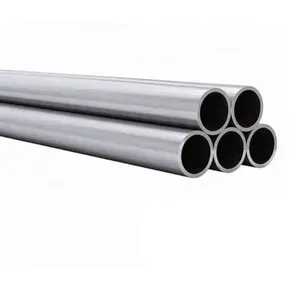 Read More

Contact Us
Recommended Products
-
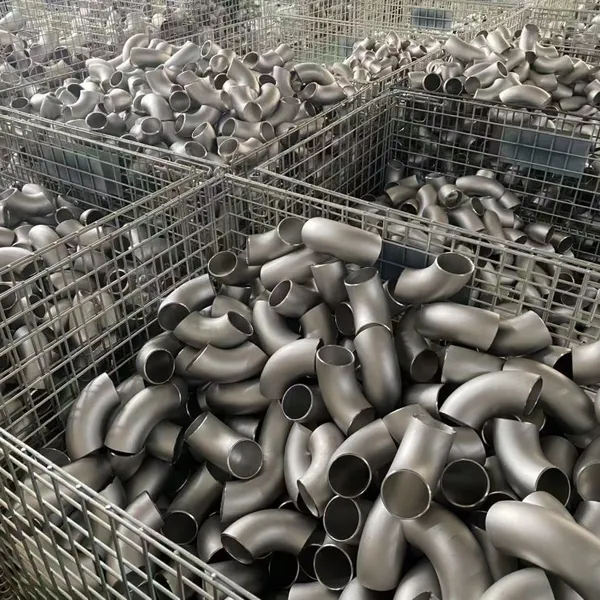
 Stainless Steel Elbow Welded Elbow 45/90/180-degree Seamless Pressed Elbow Long Radius Elbow Short Radius Elbow WholesaleNegotiableMOQ: 1 Piece
 -
316L/1.4405 Seamless Stainless Steel PipeNegotiableMOQ: 2 Meters
-
310s 440 Seamless Sanitary Piping Price 321 904l 201 20 Inch Seamless Steel Pipe A554 Stainless Steel PipeNegotiableMOQ: 1 Piece
-
China Brand ZZ Wholesale 304L 316 316L Welded Austenitic Piping Stainless Steel Pipe SupplierNegotiableMOQ: 2 Meters
-
304/304L/316/409/410/904L/2205/2507/310H Premium Stainless Steel Sheets Supplier Custom Sizes & FinishesUS$ 1.72MOQ: 1 Ton
-
Stainless Steel ASME B16.9 Sch 45 90 Degree Pipe Fittings ElbowUS$ 8MOQ: 1 Piece
-
China Brand Zz 304L 316/316L GB En JIS Standard Thin Wall Welded Stainless Steel Water Pipe/TubeNegotiableMOQ: 2 Meters
-
BA 4 Inch 6 Inch 8 Inch 201 304 304L 316 316L Welded Seamless Stainless Steel PipeNegotiableMOQ: 2 Meters
-
ASME B36.19M-2004 SCH40S Stainless Steel Pipe - Complies With EU 3.1 CertificationUS$ 1 - 650MOQ: 1 Piece
-
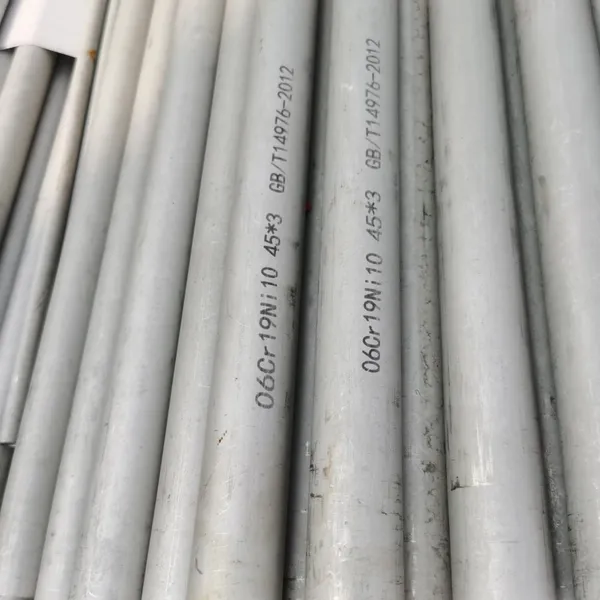
Factory TP309/TP309S/TP309H (UNS30900) Seamless Stainless Steel Pipe and Tube for Boiler BafflesUS$ 8MOQ: 200 Kilograms
-
TP347/TP347H/1.4961/S34709 Seamless Stainless Steel Pipe for UseNegotiableMOQ: 2 Meters
-
China 304 316 Stainless Steel Sanitary Welded Tube Food Grade Sanitary Grade Welded Pipe PolishingNegotiableMOQ: 1 Piece
-
China Manufacture Stainless Steel 316L Ba Seamless Welded Steel Pipe TubesUS$ 1760 - 1860MOQ: 5 Tons
-
316L/1.4405 Seamless Stainless Steel PipeNegotiableMOQ: 2 Meters
-
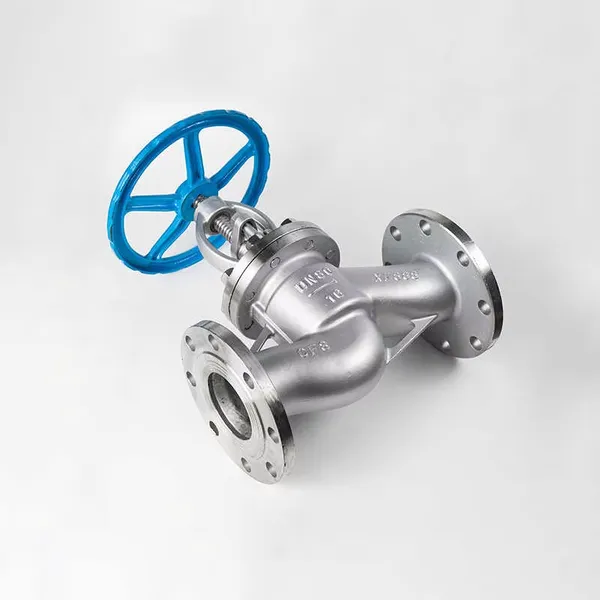
Stainless Steel Globe Valve – High Durability & Corrosion ResistanceNegotiableMOQ: 1 Piece
-
1.4529 Stainless Steel Flat Plate for Chemical Processing EquipmentUS$ 25 - 35MOQ: 1 Kilogram
-
Color Coated Steel Panels for Warehouse Partition Walls (Fireproof Grade)US$ 1 - 1.2MOQ: 50 Kilograms
-
Custom Width (600mm-1250mm) Colored Steel Coil With Scratch ResistanceUS$ 1 - 1.2MOQ: 50 Kilograms
-
0.5mm-3.0mm Colored Coated Steel Sheet With PVDF/Polyester CoatingUS$ 1 - 1.2MOQ: 50 Kilograms
-
JIS G 3322 Compliant Colored Coils With Third-Party Inspection ReportUS$ 1 - 1.2MOQ: 50 Kilograms