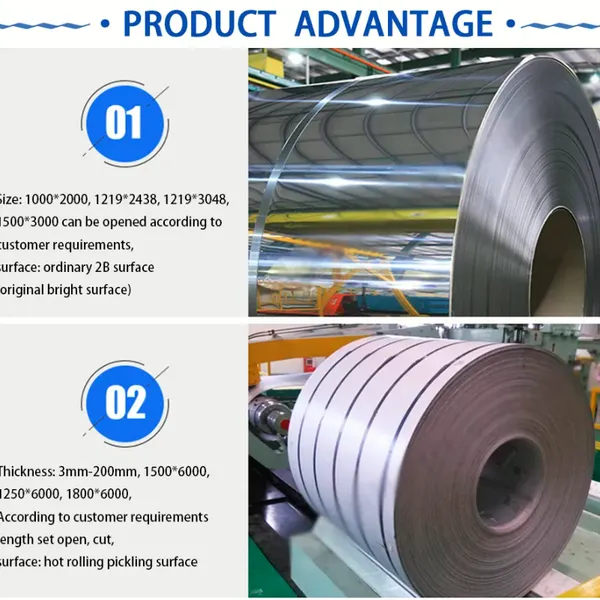

 Business License

What are the surface defects of stainless steel pipes
1. Crush damage refers to the damage to the surface of the stainless steel pipe caused by the roller holes. There are many types of crush damage, but the reasons for the crush are not limited to the following ones: adjusting the bottom line of a pair of rollers to be higher than the rolling bottom line; the rolling line will have uneven fluctuations; the vertical rollers are too tight; the height of the vertical rollers; the new holes may have too small chamfers at the edge or the chamfers do not meet the requirements; high-strength pipe blanks have high rebound and resistance to deformation, and the edge of the hole is prone to biting the pipe blank; the vertical rollers before the flat rollers are insufficient to apply force to the pipe blank, causing 304 wide steel pipes to enter the fixed width of the flat roller hole, and the pipe blank is "cut" by the hole pattern; the flat roller is low, and the lower edge of the vertical roller damages the pipe blank; indentation and dark lines.
2. Impressions and dark lines are both products of indentation damage. Their formation mechanisms are similar, but they are more concealed and are not obvious to the naked eye if not carefully observed. However, their impact on the surface quality of the welded pipe does exist.
The indentation is generally a 5-10mm reflective band, especially with the light source. The refractive index at the point of the light indentation is different from that of the other parts.
The essence of hidden lines is that the line marks before the actual line were not discovered in time and were "flattened" by the subsequent pressure. They are rough and do not reveal any problems; however, a careful inspection is necessary. Using sandpaper to wipe and tapping the surrounding surface of the stainless steel pipe with your fingernail will reveal the existence of the hidden lines. Hidden lines are more subtle and harder to detect than indentations.
3. Scratches mainly refer to faults where the rolling mill rolls without moving or has a significant difference in relative speed with the pipe billet. Their characteristics are related to the speed difference. For example, if the bearings of the vertical rollers are damaged, it hinders the rotation of the vertical rollers, causing scratches on the pipe surface; the linear speed at the rolling position on the hole is different from that at other parts. Compared with moving pipe billets, there is a certain relative motion between positions with a significant speed difference.
When the friction force reaches a certain level, the surface of the stainless steel pipe will be scratched. The former is characterized by a vertical line on the pipe surface; the latter is characterized by an irregular arc shape on the pipe surface, similar to "nail marks". It usually appears on both sides, bottom and middle of the pipe. The edges and bottom of the pipe correspond to the positions where the speed difference occurs between the forming vertical rollers, and the middle corresponds to the positions where the speed difference occurs between the forming flat rollers' holes.
Removing "nail marks" can be achieved by focusing on either the die design or the adjustment process: From the perspective of die design, within the framework of not affecting the overall deformation effect, it is possible to boldly remove the die. This not only poses no harm to the molding process but also will definitely not scratch the rear cover.
From the perspective of adjustment, if there are indentations on the bottom of the vertical roller steel pipe, reduce the height of the vertical roller; if there are indentations on both sides of the flat roller billet, appropriately tighten the vertical roller or loosen the flat roller before unloading the flat roller. If there are indentations on one side of the stainless steel welded pipe after unloading the flat roller, correct the line rolled by the vertical roller before the flat roller.
Recently Posted
-
Does the stainless steel welded pipe have specific temperature requirements during the solution heat
January 20, 2026Solution heat treatment involves heating stainless steel to a high temperature and then rapidly cooling it to achieve an oversatur Read More
 -
Can stainless steel welded pipes be made into thick pipes
January 20, 2026With the improvement of high-quality welding technology and increasingly strict weld inspection, the application fields of s Read More
 -
Three types of commonly available food-grade stainless steel on the market
January 20, 2026The common food-grade stainless steel pipes are mainly composed of iron, chromium and carbon and other elements. Household stainle Read More
 -
What are the requirements for stainless steel welding pipe production equipment
January 20, 2026As is well known, stainless steel welded pipes have been widely used in various industries such as machinery, chemical engineering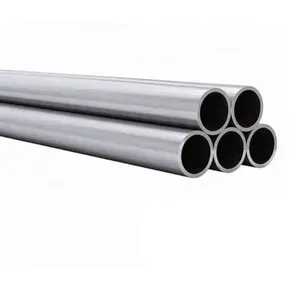 Read More

Contact Us
Recommended Products
-
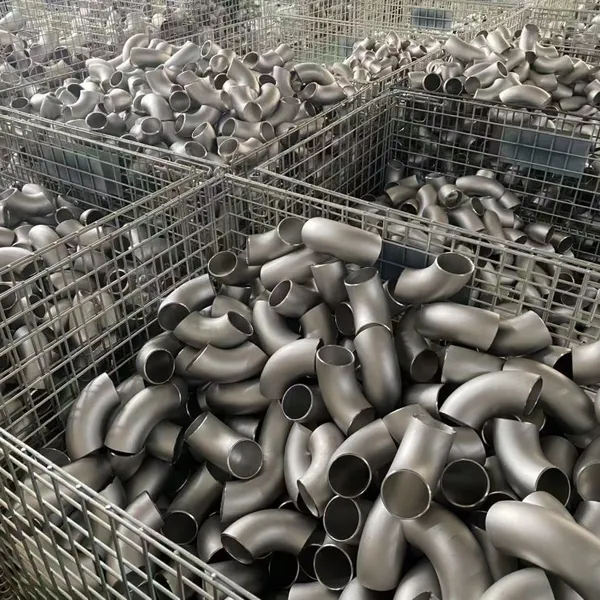
 Stainless Steel Elbow Welded Elbow 45/90/180-degree Seamless Pressed Elbow Long Radius Elbow Short Radius Elbow WholesaleNegotiableMOQ: 1 Piece
 -
316L/1.4405 Seamless Stainless Steel PipeNegotiableMOQ: 2 Meters
-
310s 440 Seamless Sanitary Piping Price 321 904l 201 20 Inch Seamless Steel Pipe A554 Stainless Steel PipeNegotiableMOQ: 1 Piece
-
China Brand ZZ Wholesale 304L 316 316L Welded Austenitic Piping Stainless Steel Pipe SupplierNegotiableMOQ: 2 Meters
-
304/304L/316/409/410/904L/2205/2507/310H Premium Stainless Steel Sheets Supplier Custom Sizes & FinishesUS$ 1.72MOQ: 1 Ton
-
Stainless Steel ASME B16.9 Sch 45 90 Degree Pipe Fittings ElbowUS$ 8MOQ: 1 Piece
-
China Brand Zz 304L 316/316L GB En JIS Standard Thin Wall Welded Stainless Steel Water Pipe/TubeNegotiableMOQ: 2 Meters
-
BA 4 Inch 6 Inch 8 Inch 201 304 304L 316 316L Welded Seamless Stainless Steel PipeNegotiableMOQ: 2 Meters
-
ASME B36.19M-2004 SCH40S Stainless Steel Pipe - Complies With EU 3.1 CertificationUS$ 1 - 650MOQ: 1 Piece
-
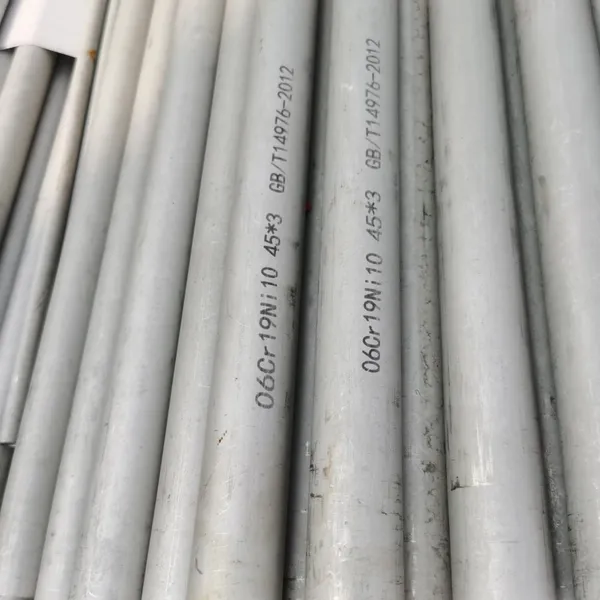
Factory TP309/TP309S/TP309H (UNS30900) Seamless Stainless Steel Pipe and Tube for Boiler BafflesUS$ 8MOQ: 200 Kilograms
-
TP347/TP347H/1.4961/S34709 Seamless Stainless Steel Pipe for UseNegotiableMOQ: 2 Meters
-
China 304 316 Stainless Steel Sanitary Welded Tube Food Grade Sanitary Grade Welded Pipe PolishingNegotiableMOQ: 1 Piece
-
China Manufacture Stainless Steel 316L Ba Seamless Welded Steel Pipe TubesUS$ 1760 - 1860MOQ: 5 Tons
-
316L/1.4405 Seamless Stainless Steel PipeNegotiableMOQ: 2 Meters
-
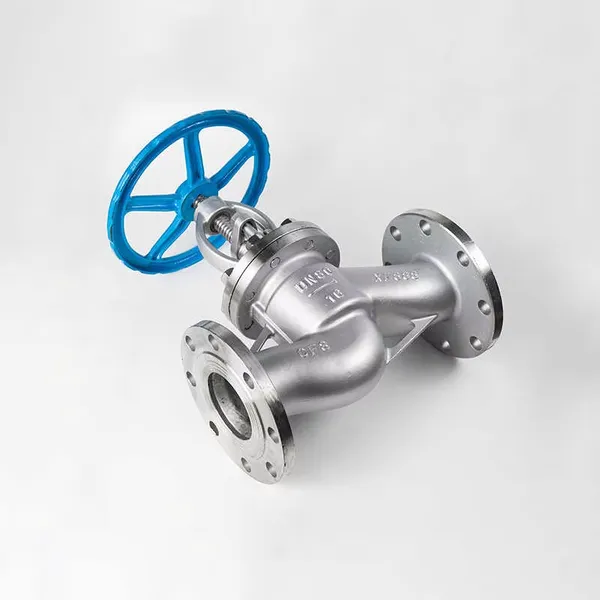
Stainless Steel Globe Valve – High Durability & Corrosion ResistanceNegotiableMOQ: 1 Piece
-
1.4529 Stainless Steel Flat Plate for Chemical Processing EquipmentUS$ 25 - 35MOQ: 1 Kilogram
-
Color Coated Steel Panels for Warehouse Partition Walls (Fireproof Grade)US$ 1 - 1.2MOQ: 50 Kilograms
-
Custom Width (600mm-1250mm) Colored Steel Coil With Scratch ResistanceUS$ 1 - 1.2MOQ: 50 Kilograms
-
0.5mm-3.0mm Colored Coated Steel Sheet With PVDF/Polyester CoatingUS$ 1 - 1.2MOQ: 50 Kilograms
-
JIS G 3322 Compliant Colored Coils With Third-Party Inspection ReportUS$ 1 - 1.2MOQ: 50 Kilograms